
25 editable reference diagrams
Reliability Architecture Diagrams
Reliability architecture diagrams show redundancy, recovery, observability and the controls that prevent one failure from spreading. Compare failover, queues, isolation and disaster-recovery patterns around explicit service objectives.
Start with the recovery time and data loss your business can tolerate. Then identify what is detected, which component takes action and how recovery is verified. A second instance or region adds value only when dependencies, capacity and failover procedures support it.
Choose a diagram for your design question
Open a reference to inspect its component flow and trade-offs, then adapt it in the browser-local editor. Manual editing does not require login; AI generation and account storage do.
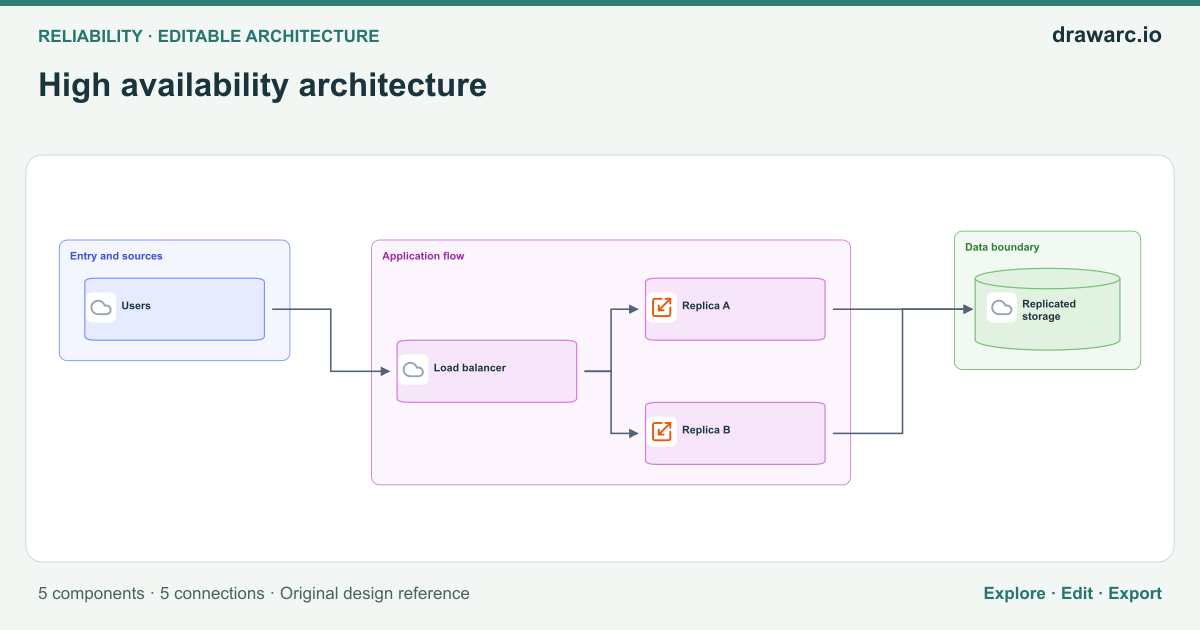
High availability architecture
Remove shared single points of failure.
5 components · 5 connections
Explore high availability architecture →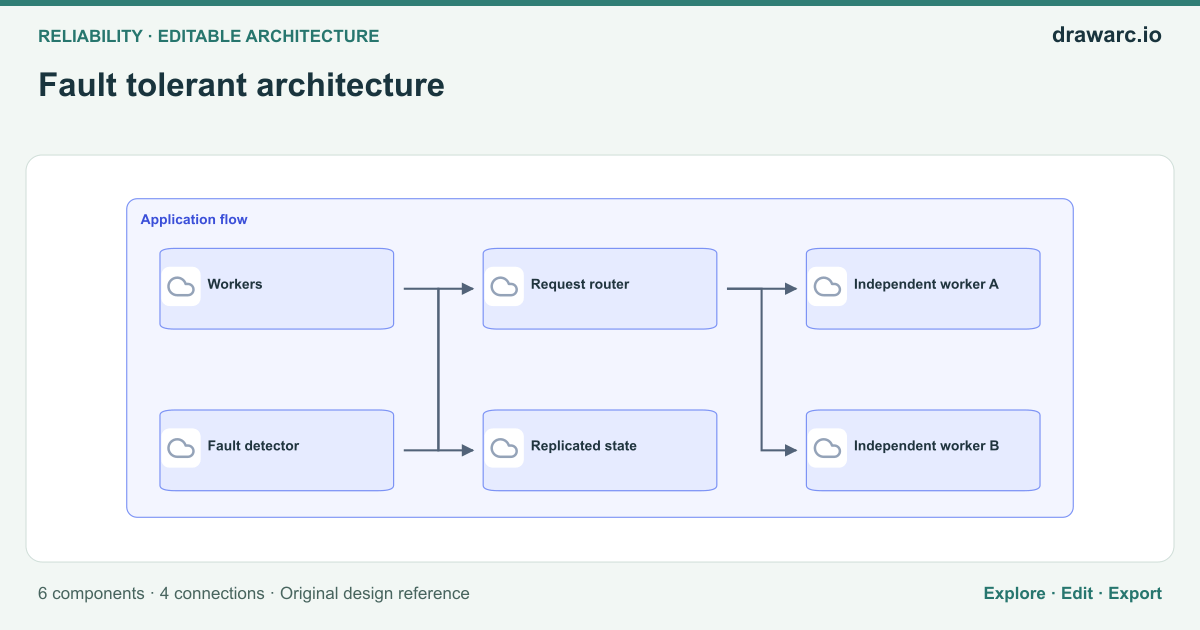
Fault tolerant architecture
Specify tolerated faults and degraded behavior.
6 components · 4 connections
Explore fault tolerant architecture →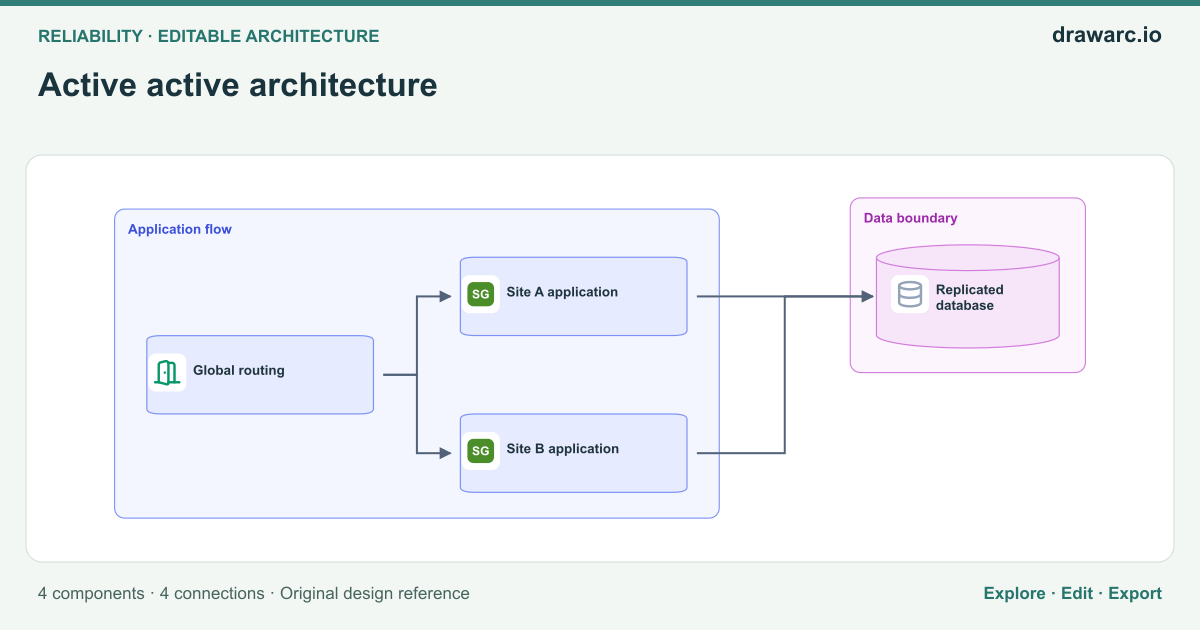
Active active architecture
Resolve concurrent writes deliberately.
4 components · 4 connections
Explore active active architecture →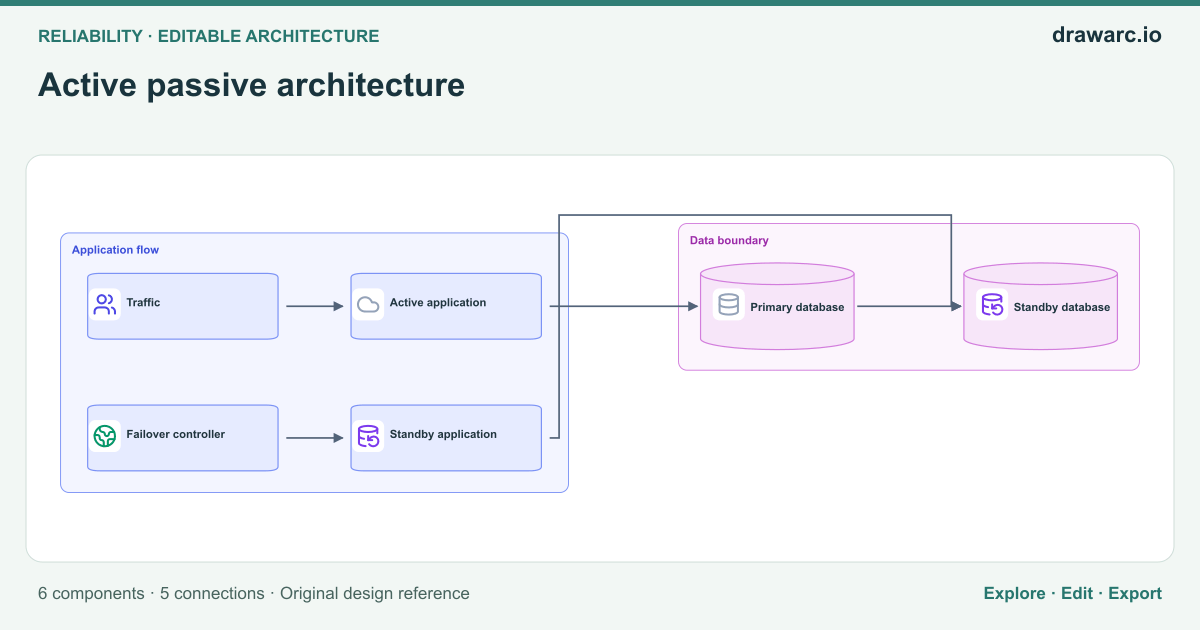
Active passive architecture
Test promotion and prevent split-brain writes.
6 components · 5 connections
Explore active passive architecture →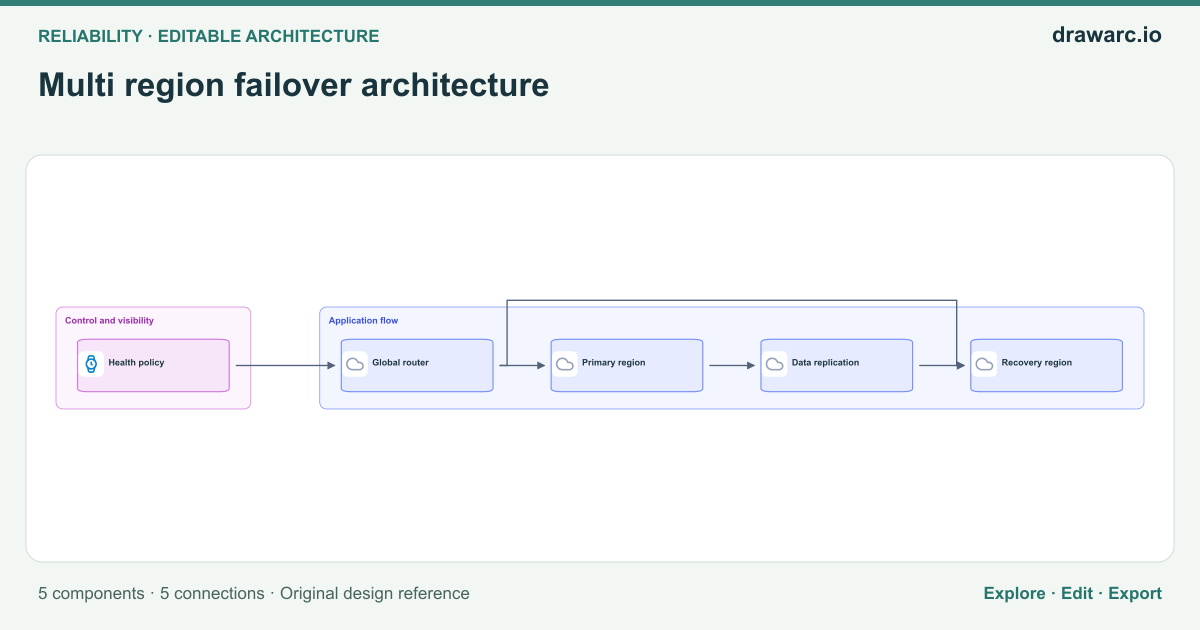
Multi region failover architecture
Traffic failover must respect data readiness.
5 components · 5 connections
Explore multi region failover architecture →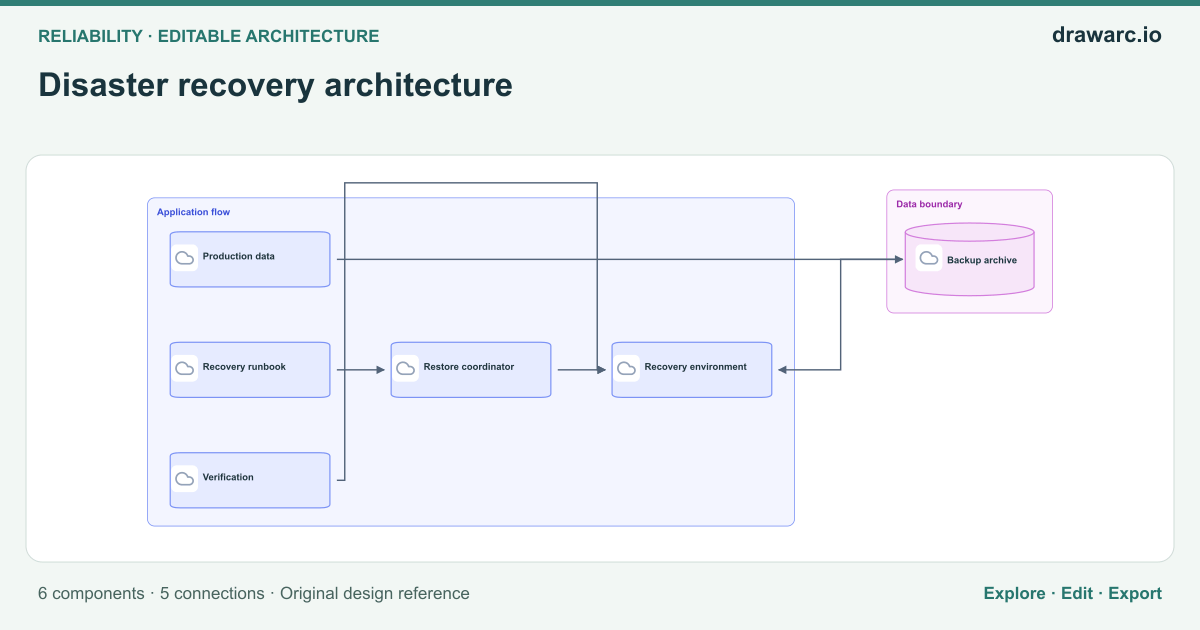
Disaster recovery architecture
Measure recovery time and data loss.
6 components · 5 connections
Explore disaster recovery architecture →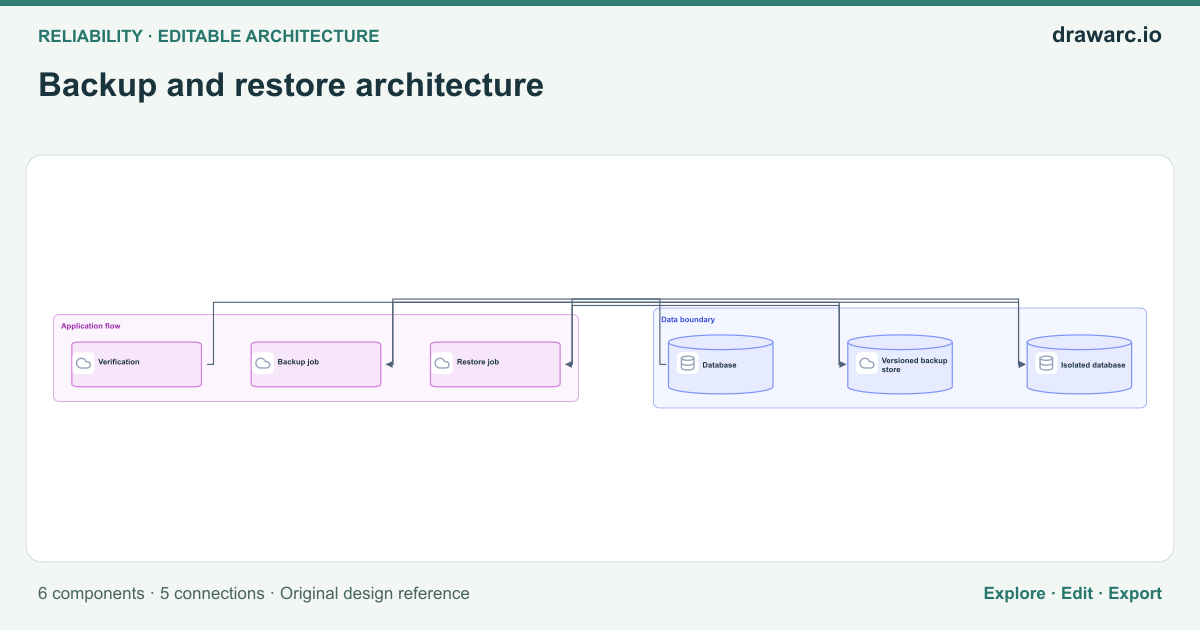
Backup and restore architecture
Prove recoverability through regular restore tests.
6 components · 5 connections
Explore backup and restore architecture →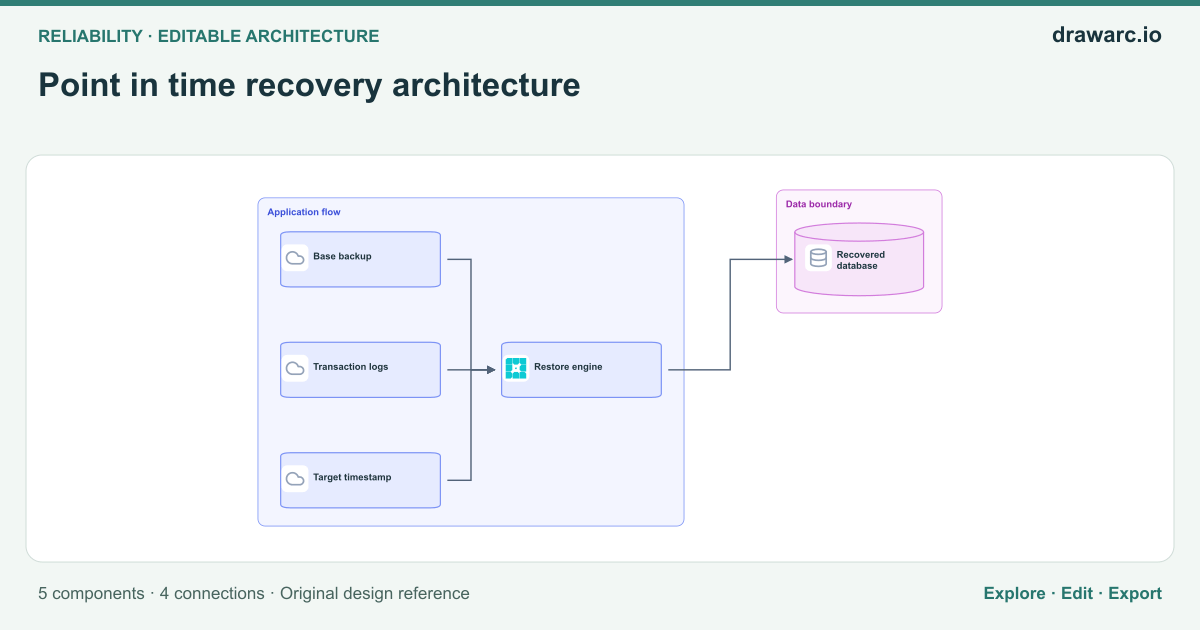
Point in time recovery architecture
Retain a complete log chain.
5 components · 4 connections
Explore point in time recovery architecture →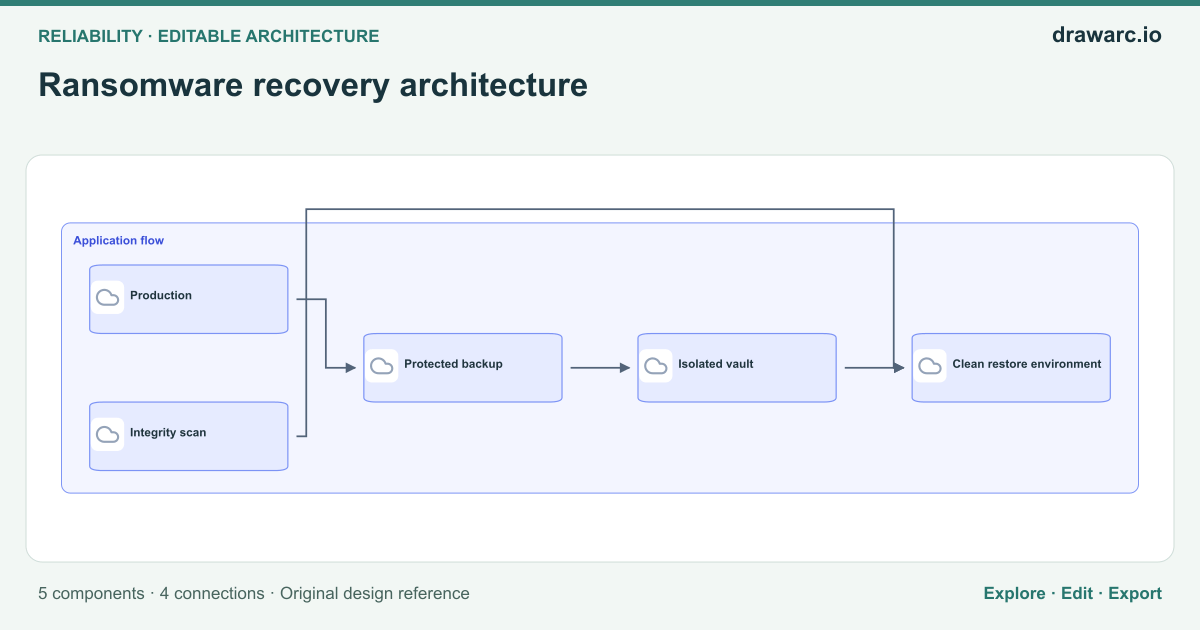
Ransomware recovery architecture
Separate backup administration from production credentials.
5 components · 4 connections
Explore ransomware recovery architecture →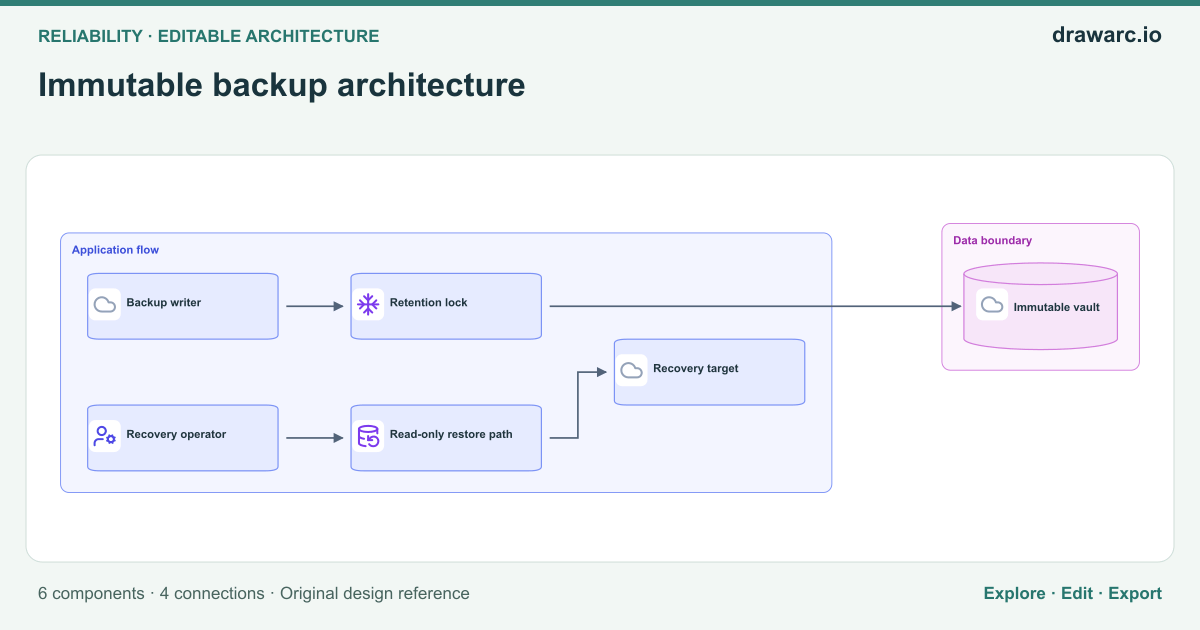
Immutable backup architecture
Test retention and administrative recovery procedures.
6 components · 4 connections
Explore immutable backup architecture →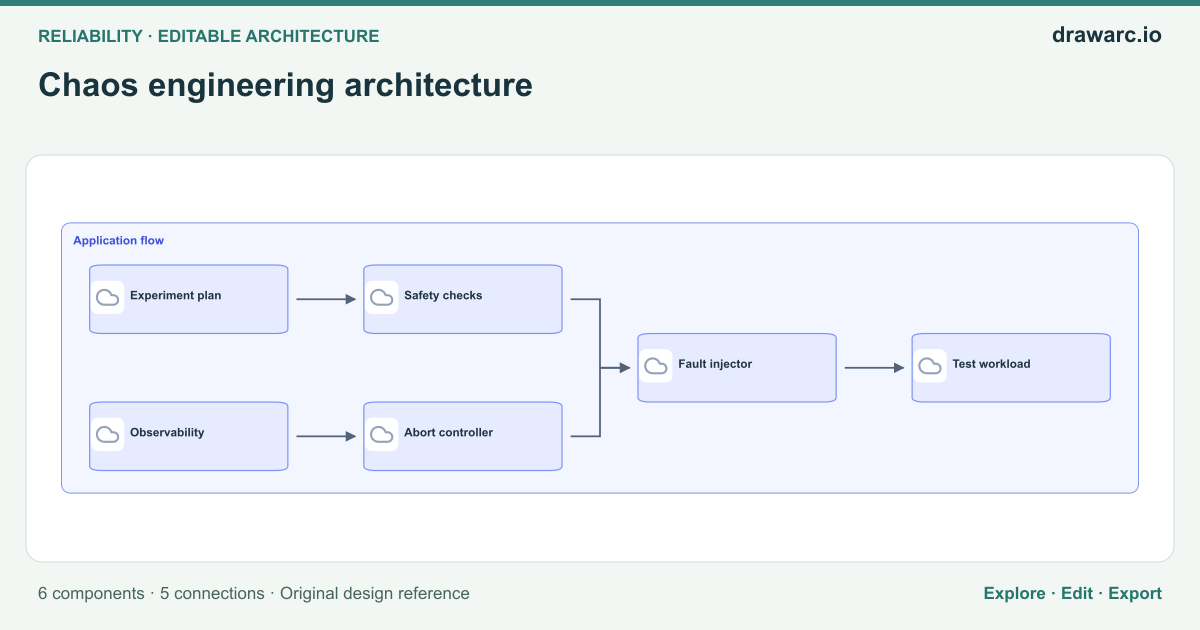
Chaos engineering architecture
Use bounded experiments with clear abort criteria.
6 components · 5 connections
Explore chaos engineering architecture →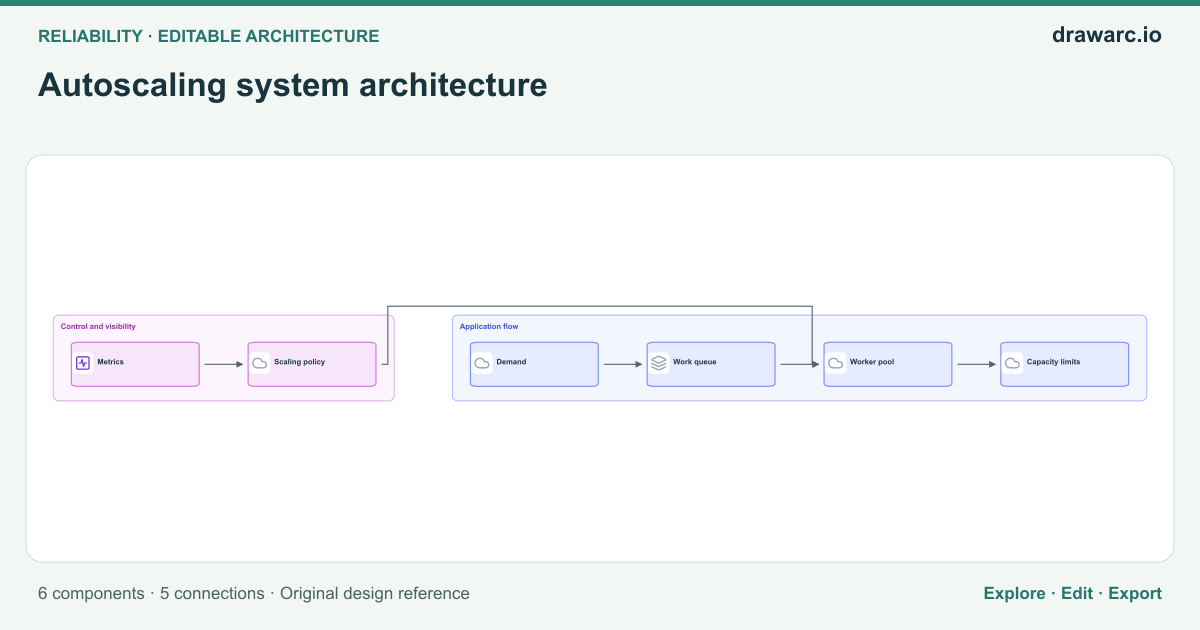
Autoscaling system architecture
Scaling cannot fix an overloaded downstream dependency.
6 components · 5 connections
Explore autoscaling system architecture →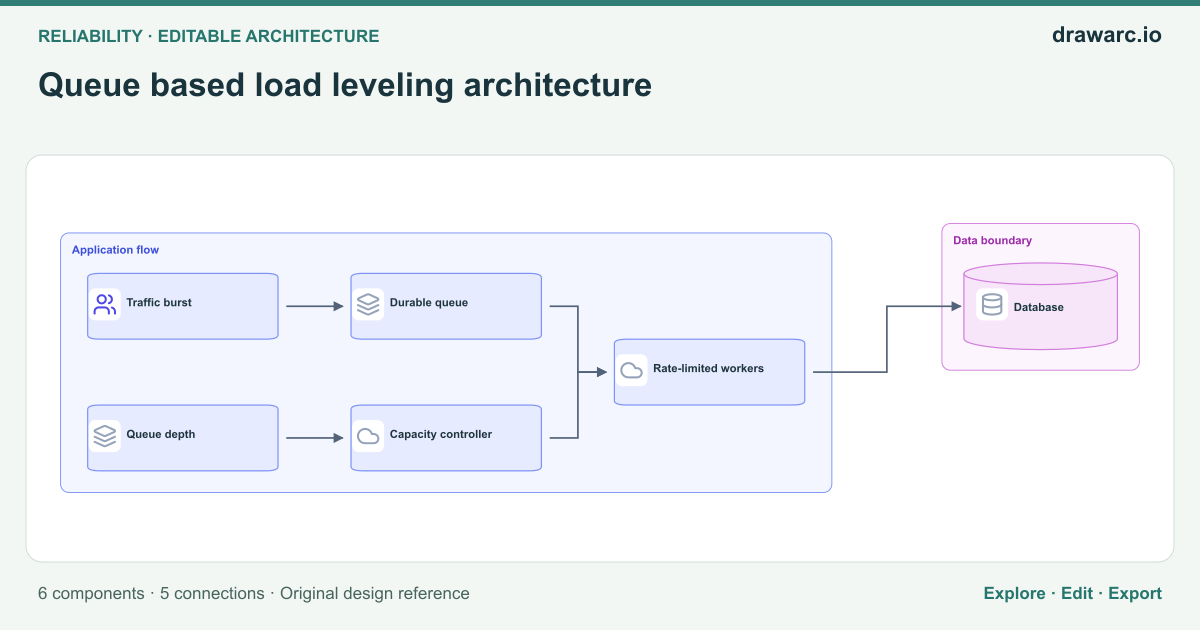
Queue based load leveling architecture
Define maximum backlog age and capacity.
6 components · 5 connections
Explore queue based load leveling architecture →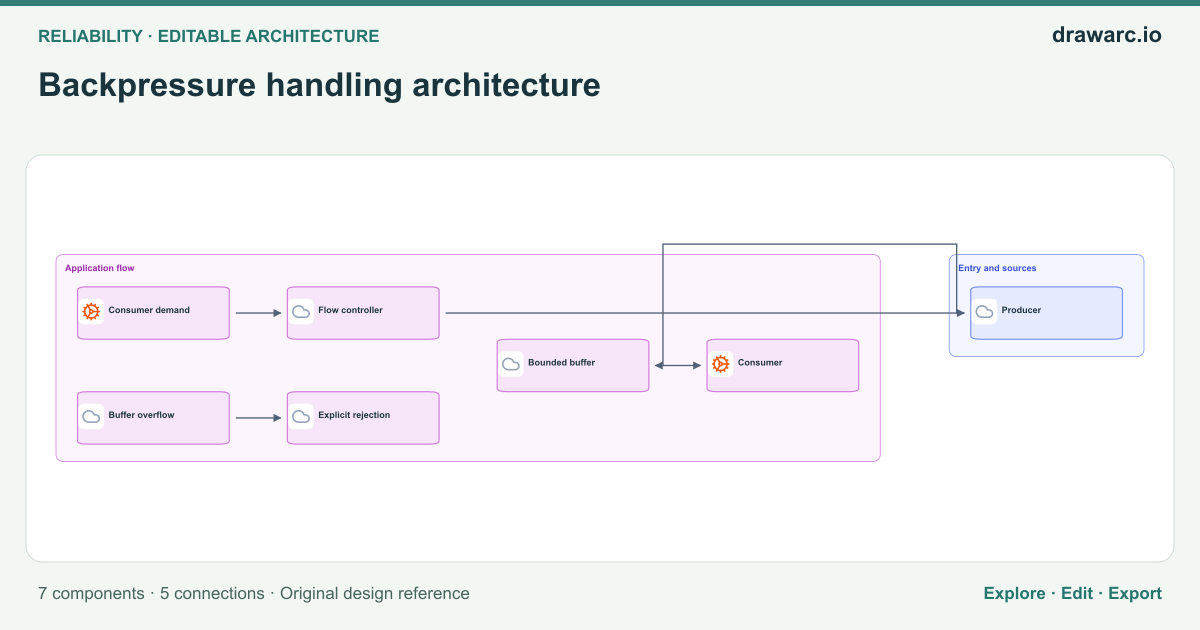
Backpressure handling architecture
Bound memory and expose overload honestly.
7 components · 5 connections
Explore backpressure handling architecture →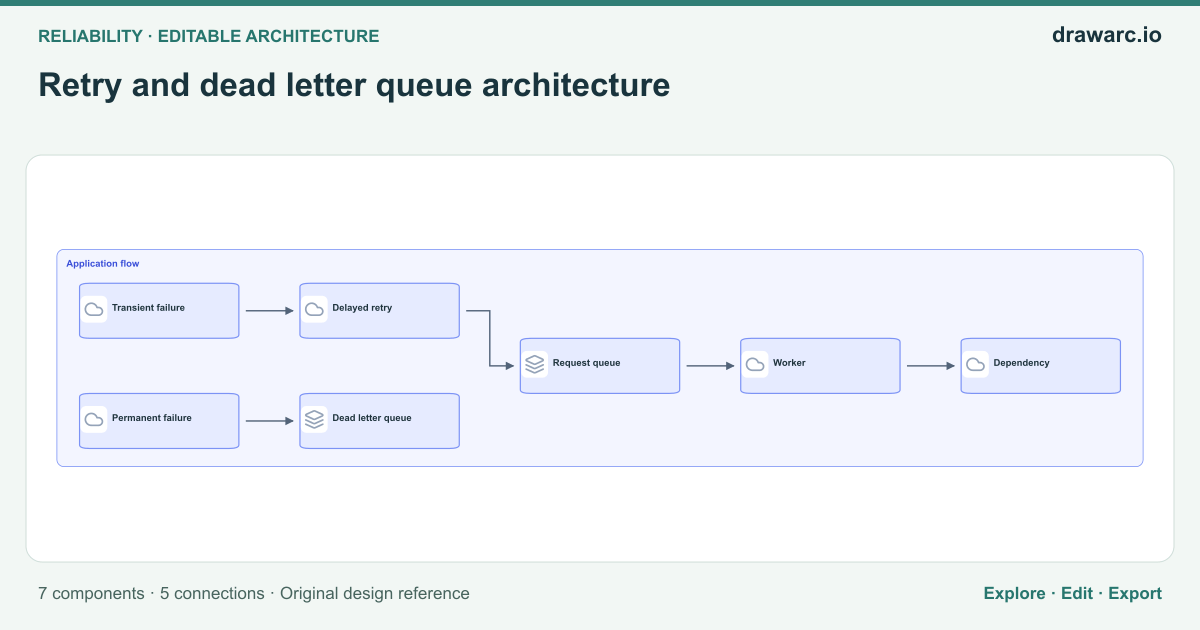
Retry and dead letter queue architecture
Separate transient failures from invalid work.
7 components · 5 connections
Explore retry and dead letter queue architecture →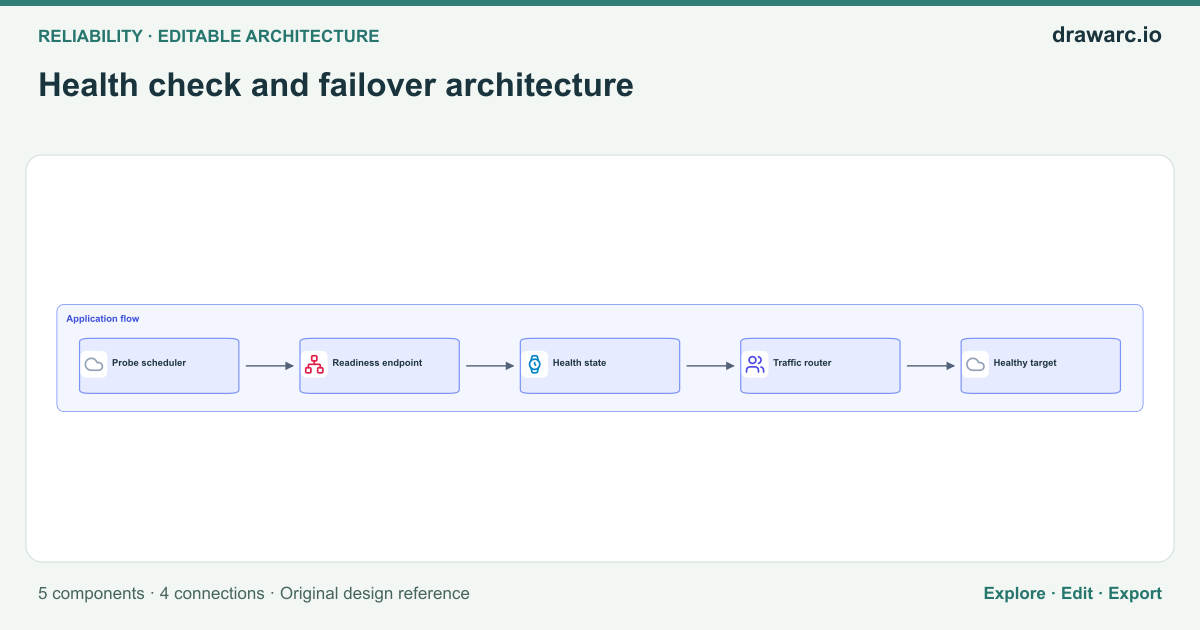
Health check and failover architecture
Avoid checks that amplify dependency outages.
5 components · 4 connections
Explore health check and failover architecture →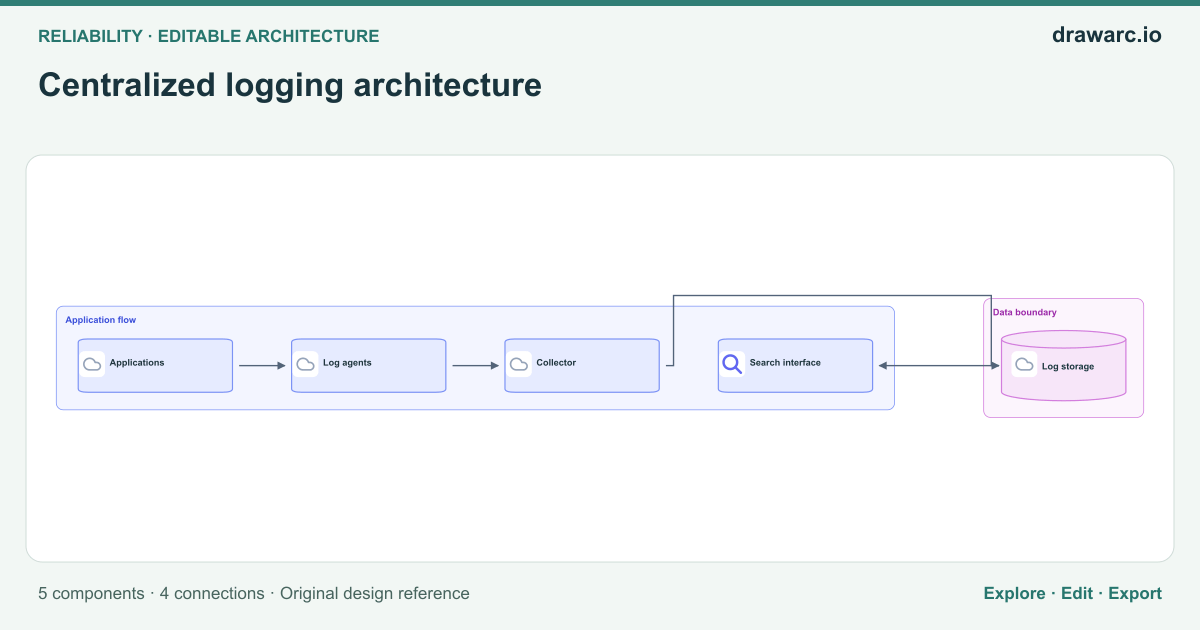
Centralized logging architecture
Redact sensitive data before collection.
5 components · 4 connections
Explore centralized logging architecture →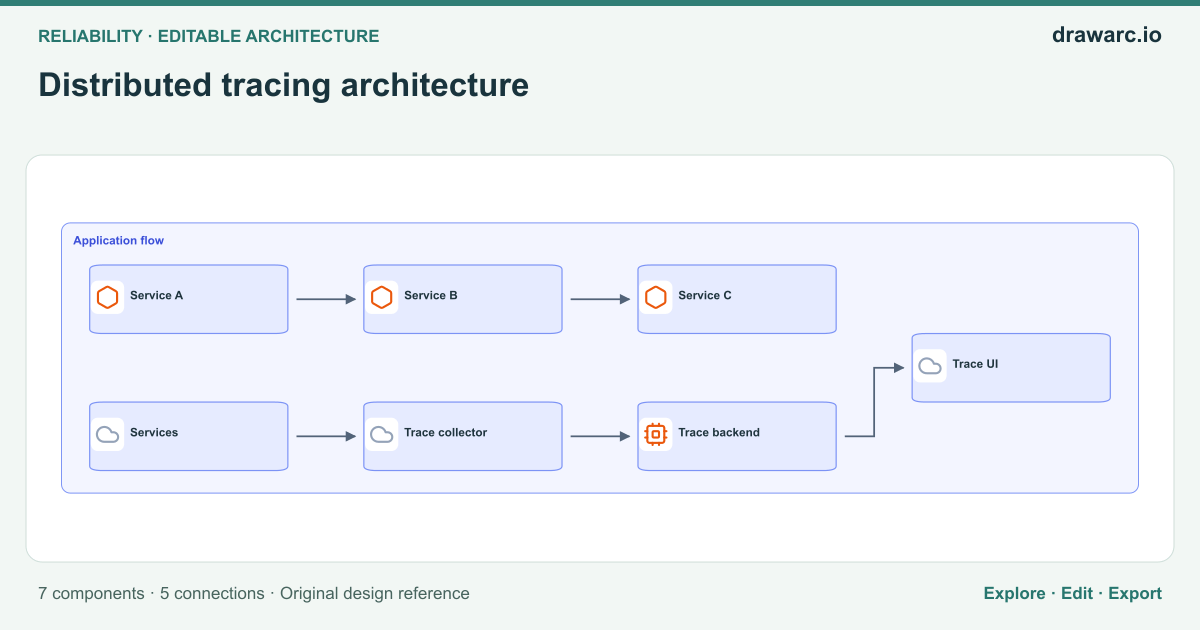
Distributed tracing architecture
Propagate context without logging confidential payloads.
7 components · 5 connections
Explore distributed tracing architecture →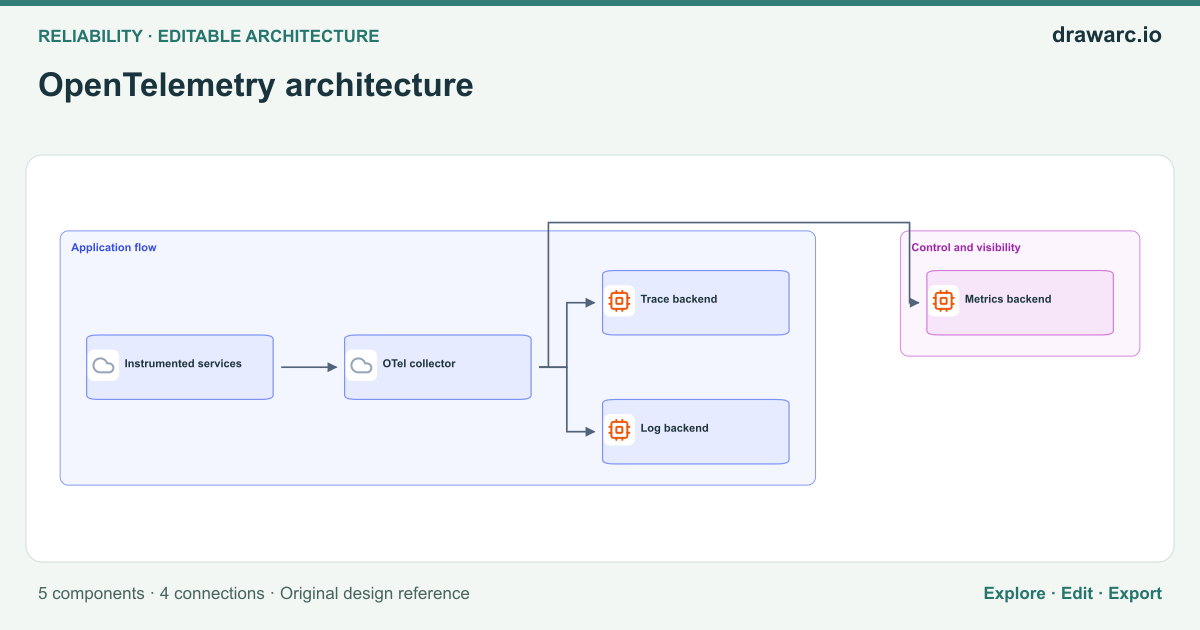
OpenTelemetry architecture
Control telemetry volume and sensitive attributes.
5 components · 4 connections
Explore opentelemetry architecture →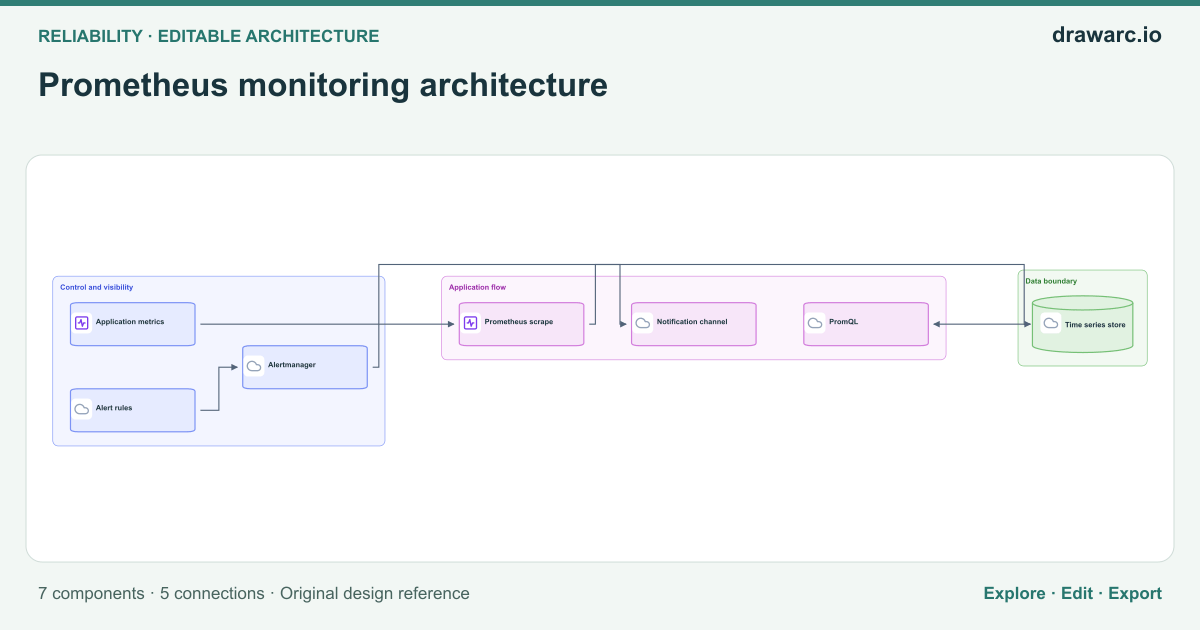
Prometheus monitoring architecture
Use actionable alerts with clear ownership.
7 components · 5 connections
Explore prometheus monitoring architecture →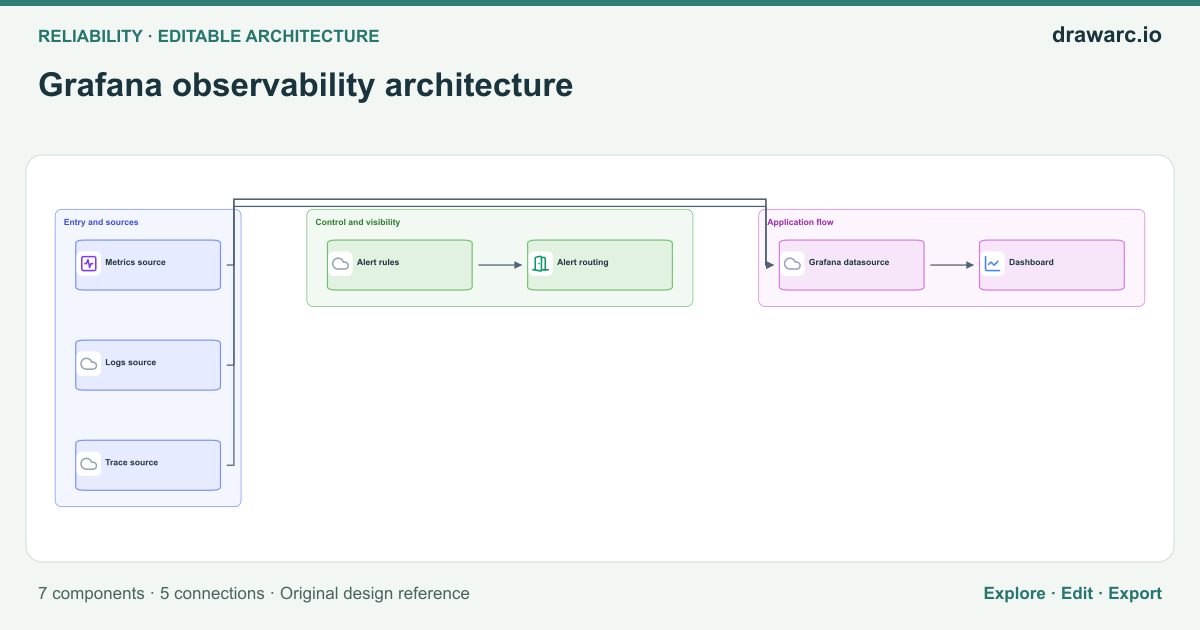
Grafana observability architecture
Do not confuse dashboards with reliable alerting.
7 components · 5 connections
Explore grafana observability architecture →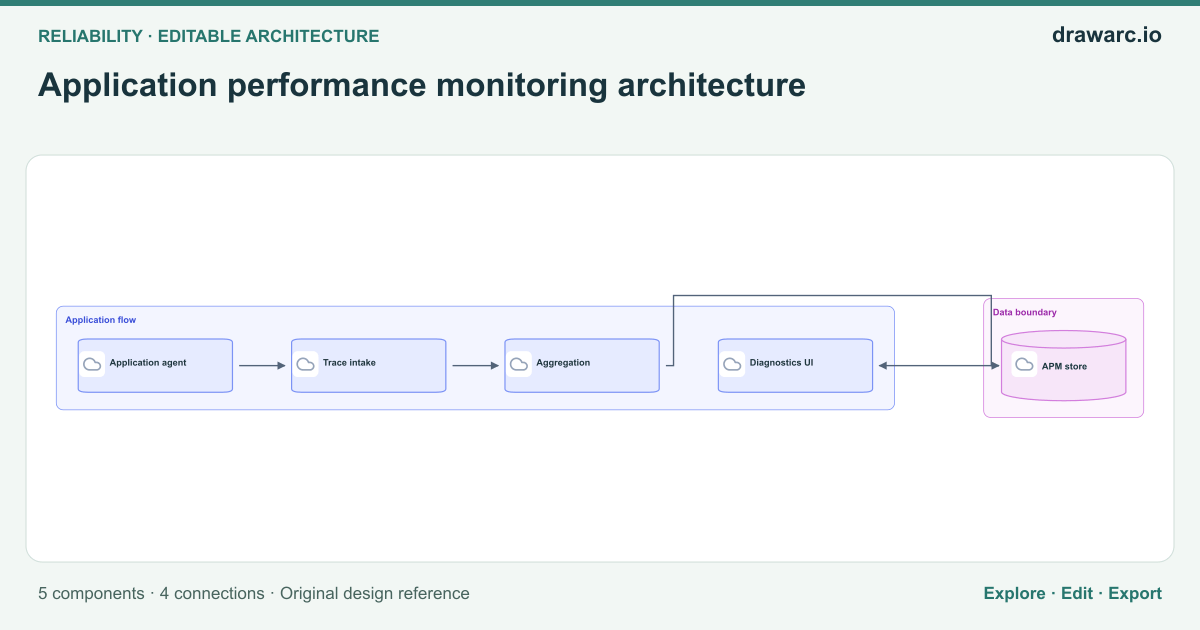
Application performance monitoring architecture
Balance instrumentation detail against overhead.
5 components · 4 connections
Explore application performance monitoring architecture →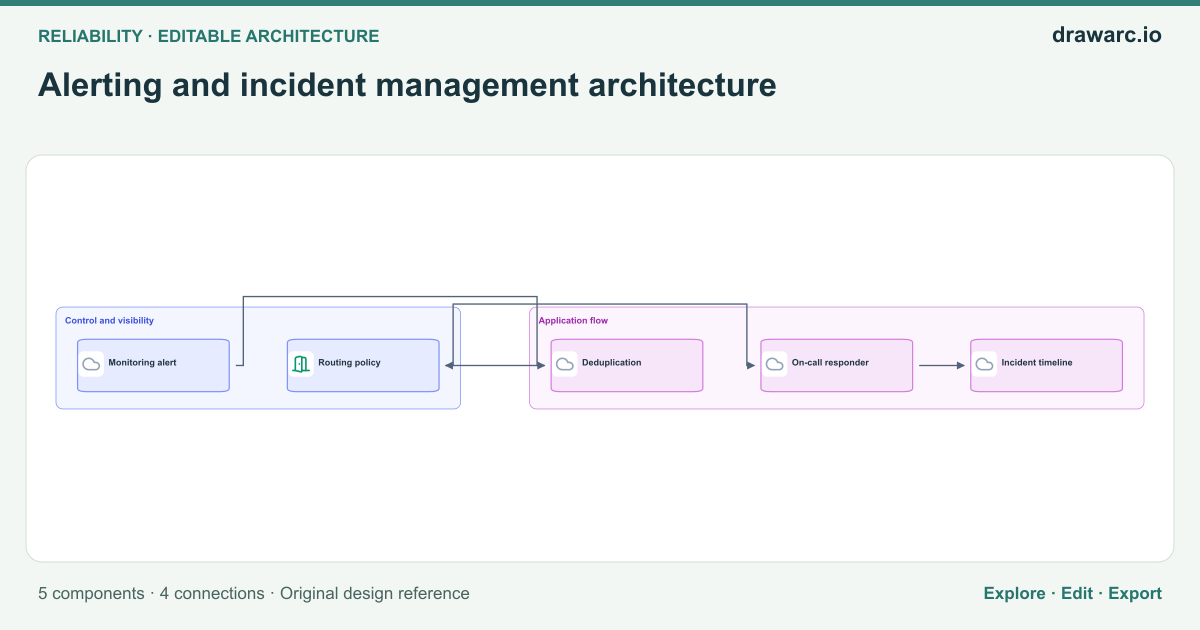
Alerting and incident management architecture
Test escalation and ownership changes.
5 components · 4 connections
Explore alerting and incident management architecture →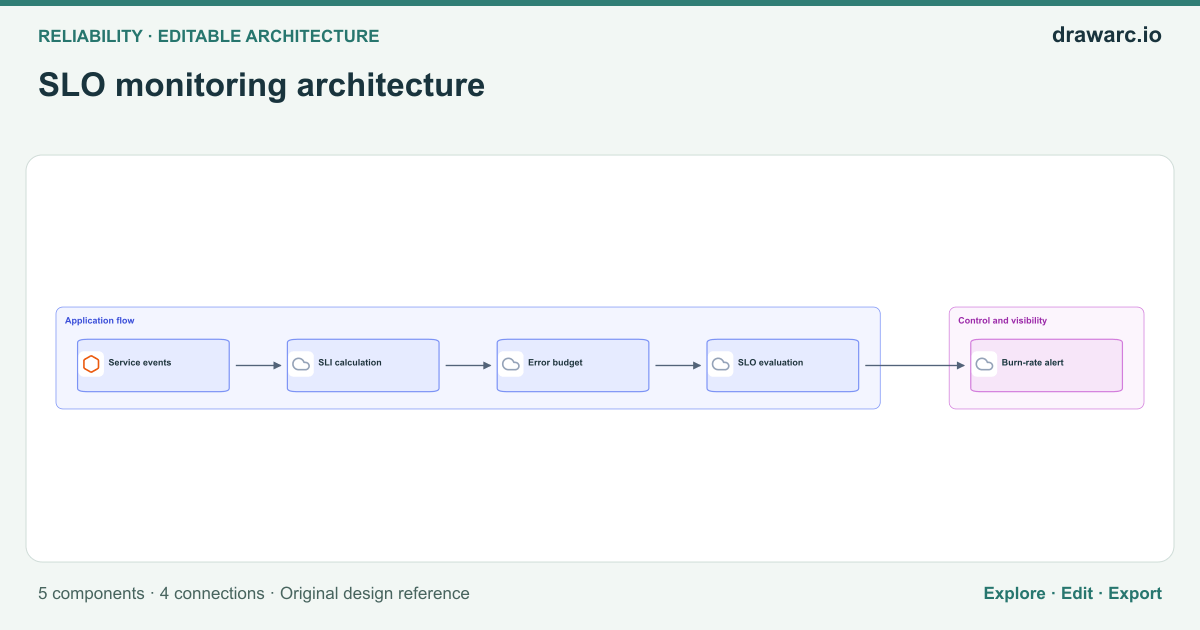
SLO monitoring architecture
Base objectives on user-visible outcomes.
5 components · 4 connections
Explore slo monitoring architecture →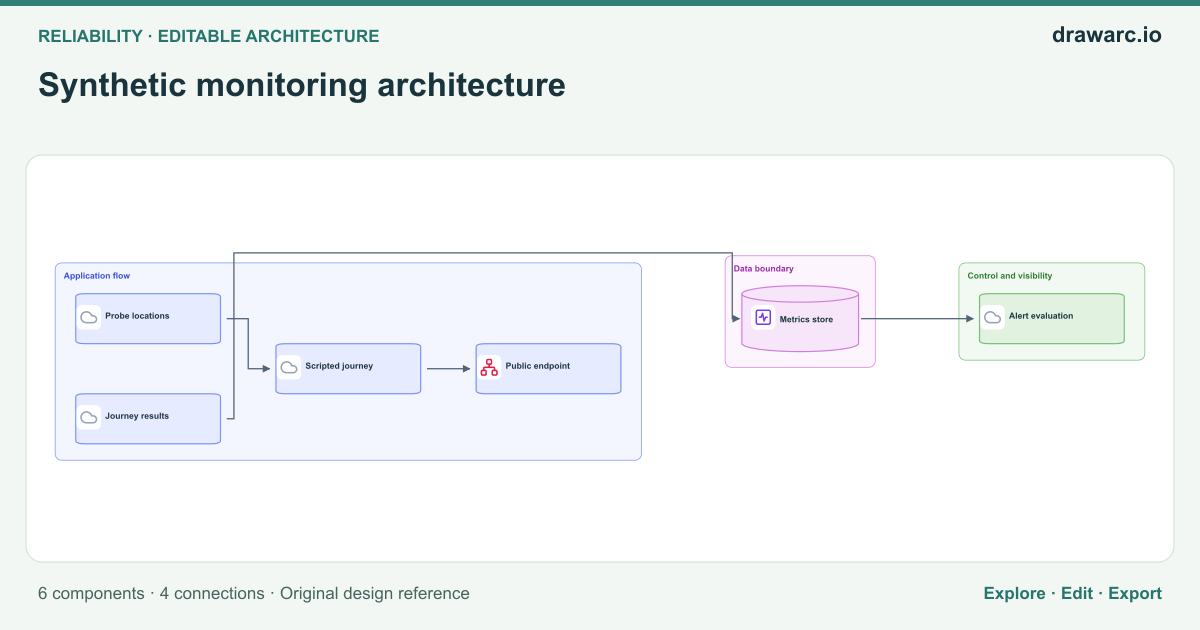
Synthetic monitoring architecture
Use safe test identities and bounded operations.
6 components · 4 connections
Explore synthetic monitoring architecture →