
25 editable reference diagrams
Software Architecture Diagrams
Choose a software architecture by the boundaries your team needs to maintain: presentation, business rules, data ownership and integration. Compare layered, clean, hexagonal and modular designs before committing to a deployment model.
Start with the simplest structure that keeps those responsibilities clear. A microservice introduces network and operational boundaries; a module inside one application may provide enough separation. Use these diagrams to discuss dependencies and change ownership.
Choose a diagram for your design question
Open a reference to inspect its component flow and trade-offs, then adapt it in the browser-local editor. Manual editing does not require login; AI generation and account storage do.
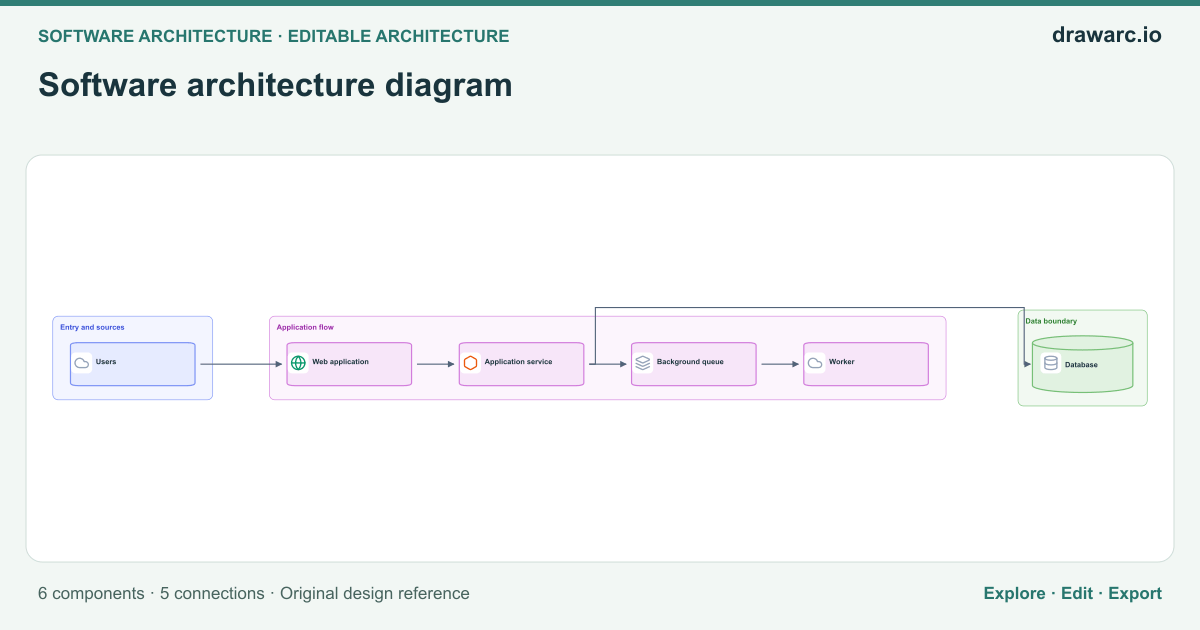
Software architecture diagram
Separate delivery, business rules and persistent state.
6 components · 5 connections
Explore software architecture diagram →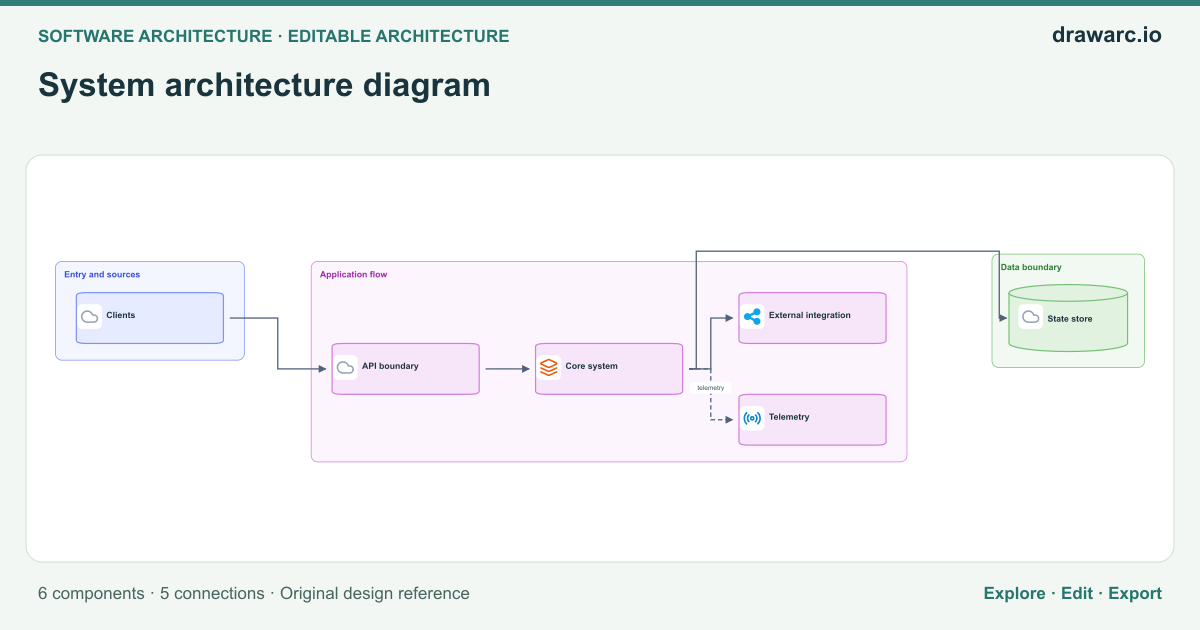
System architecture diagram
Show system boundaries before selecting deployment products.
6 components · 5 connections
Explore system architecture diagram →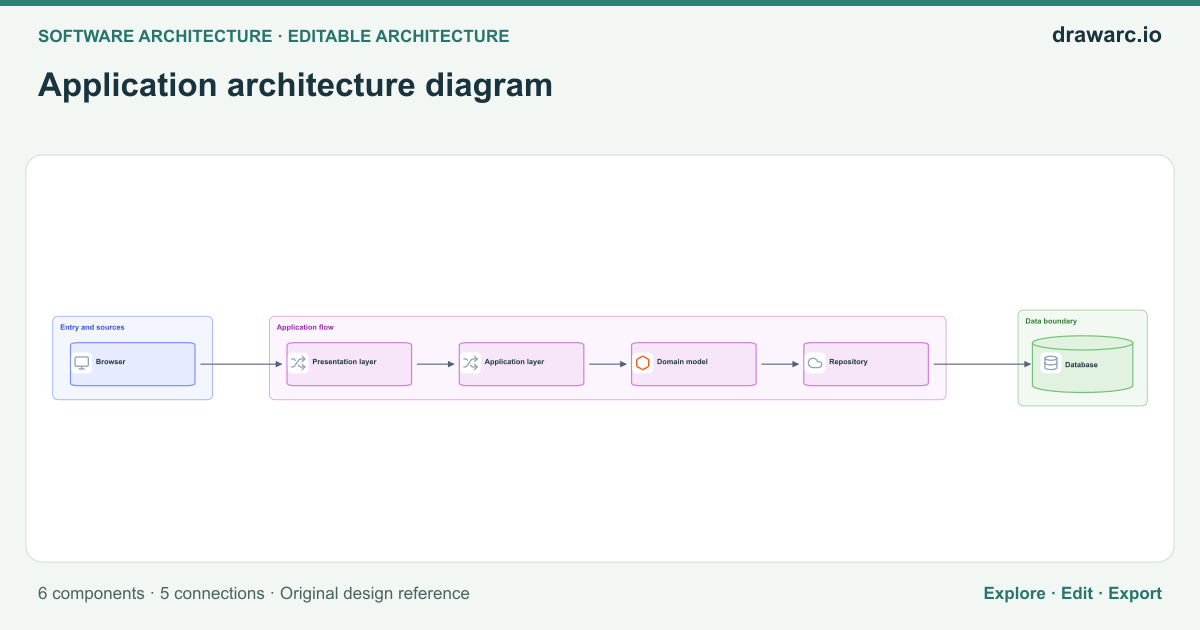
Application architecture diagram
Keep business rules independent of presentation code.
6 components · 5 connections
Explore application architecture diagram →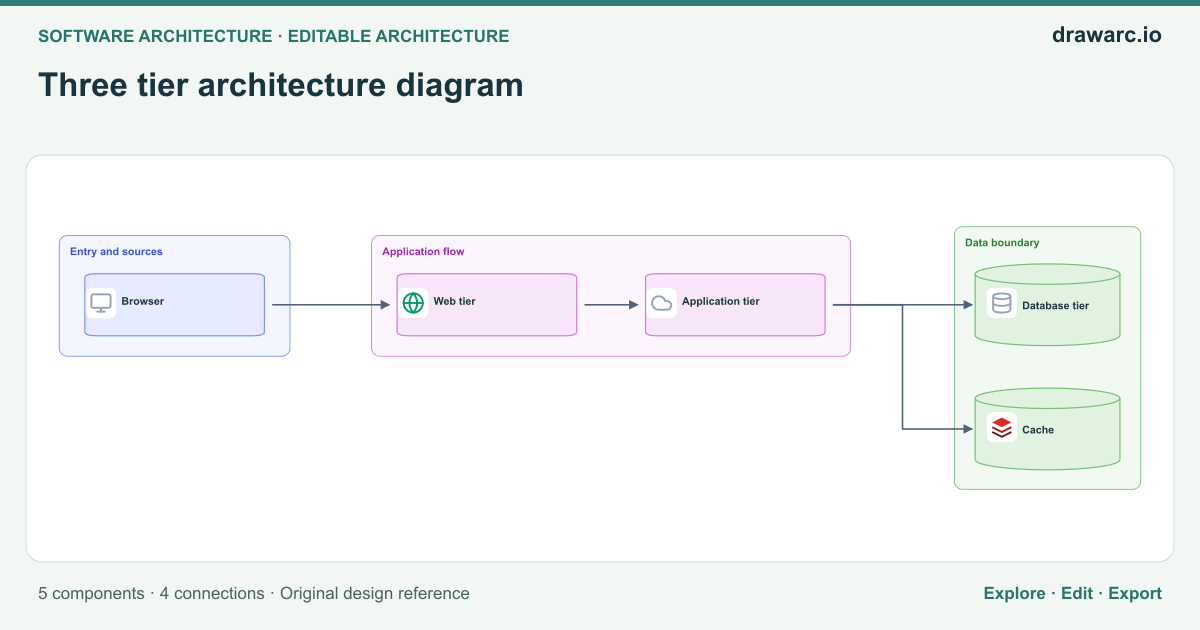
Three tier architecture diagram
Limit direct access between presentation and persistence.
5 components · 4 connections
Explore three tier architecture diagram →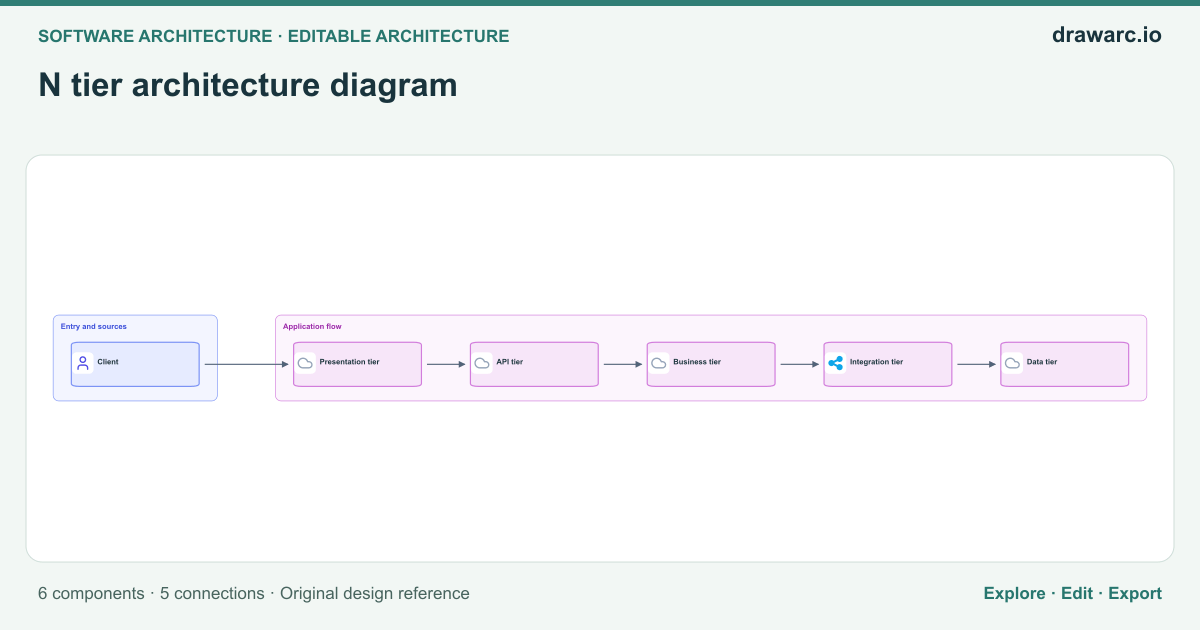
N tier architecture diagram
Introduce tiers only for a measurable ownership boundary.
6 components · 5 connections
Explore n tier architecture diagram →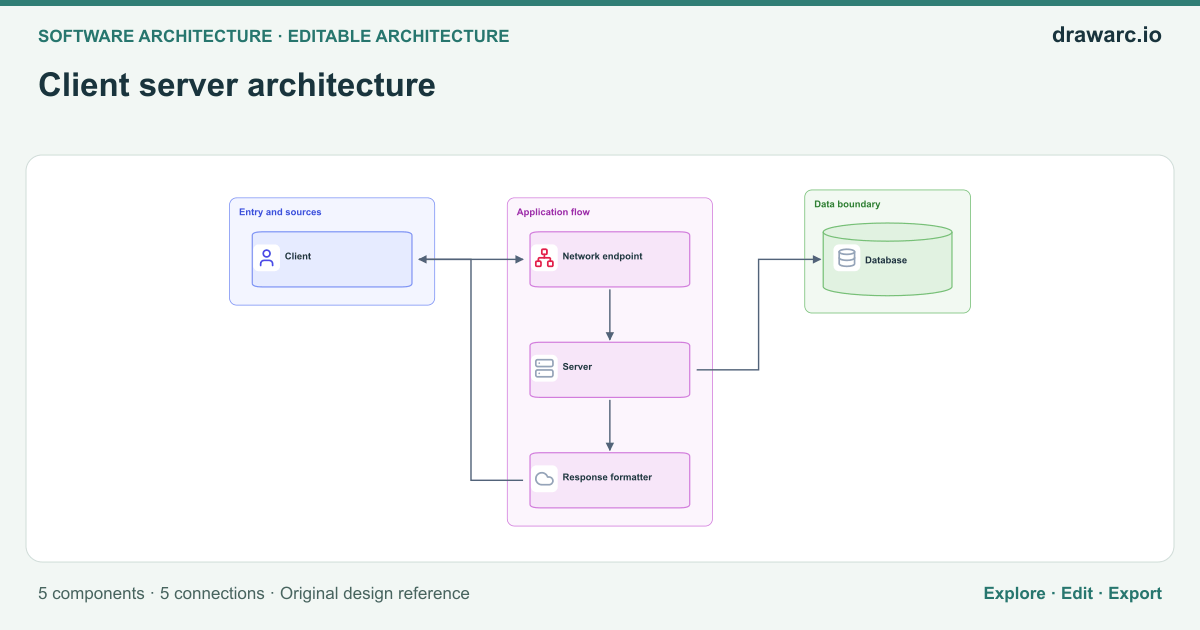
Client server architecture
Keep server-side authorization independent of client validation.
5 components · 5 connections
Explore client server architecture →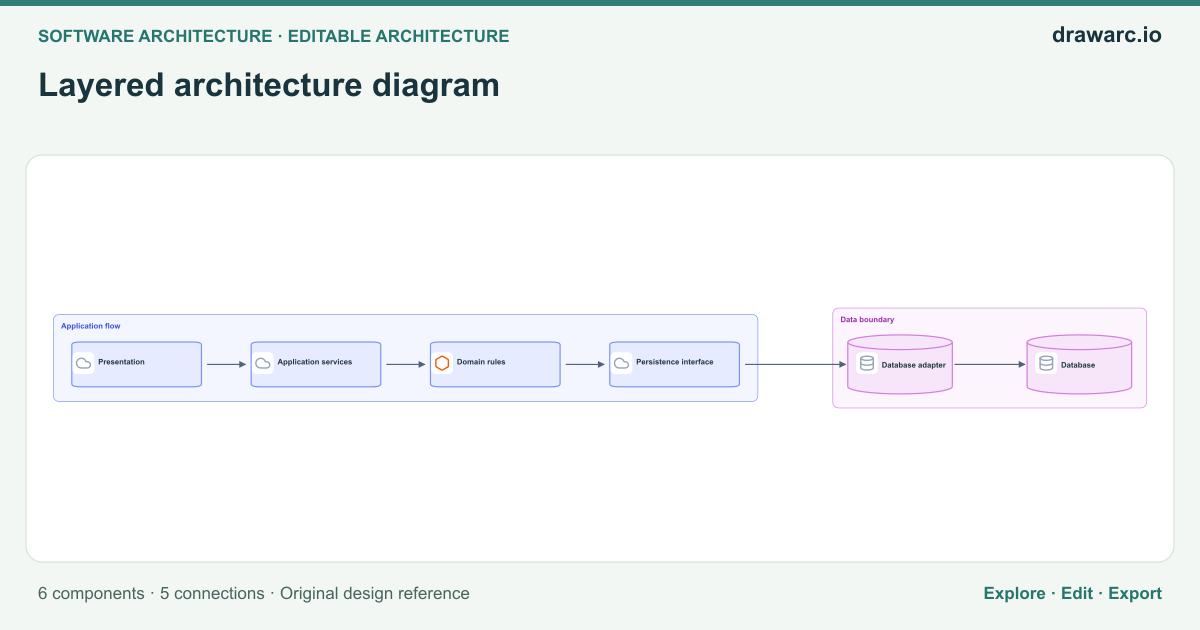
Layered architecture diagram
Restrict dependencies to intentional layer boundaries.
6 components · 5 connections
Explore layered architecture diagram →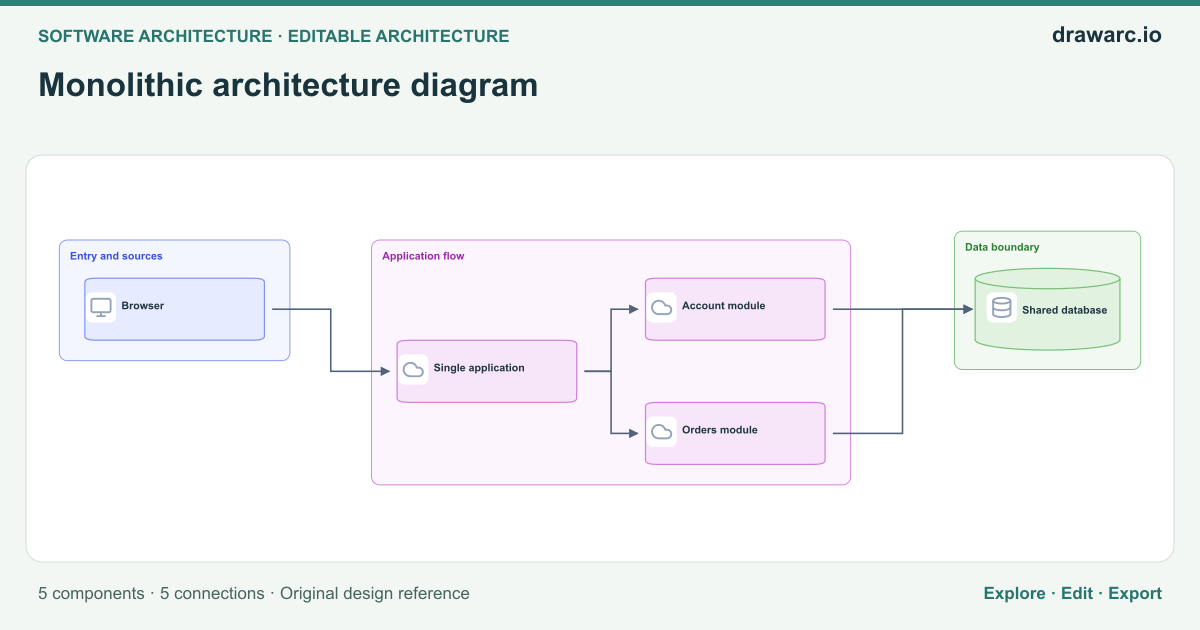
Monolithic architecture diagram
One deployment can still have clear internal boundaries.
5 components · 5 connections
Explore monolithic architecture diagram →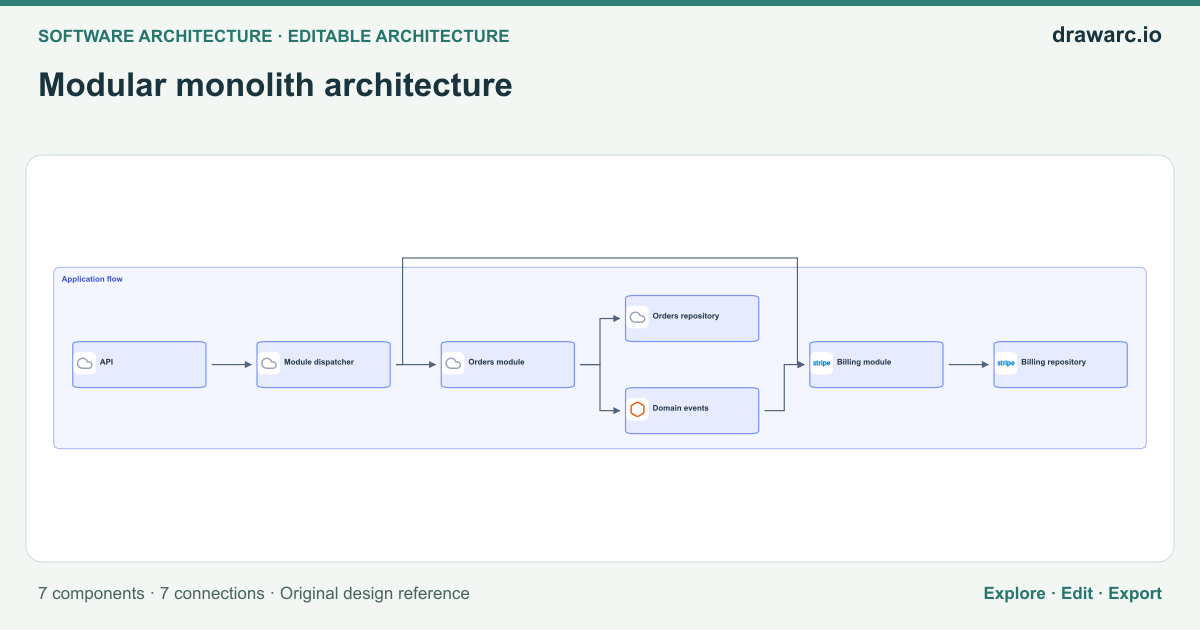
Modular monolith architecture
Keep module data ownership explicit inside one process.
7 components · 7 connections
Explore modular monolith architecture →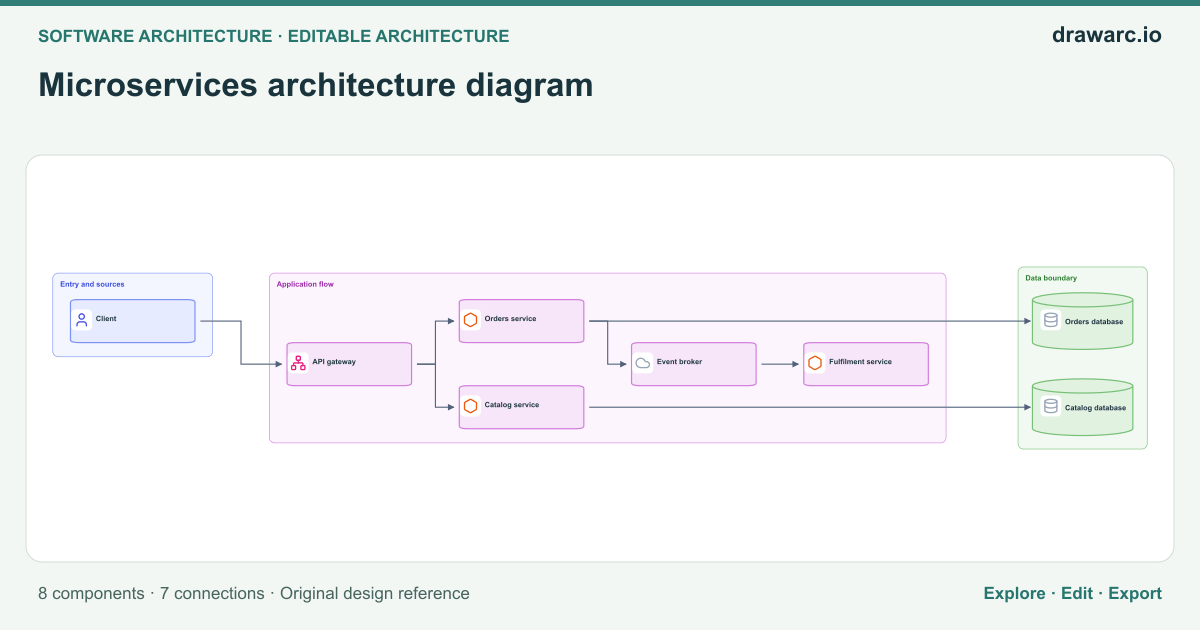
Microservices architecture diagram
Each service owns its state and published contract.
8 components · 7 connections
Explore microservices architecture diagram →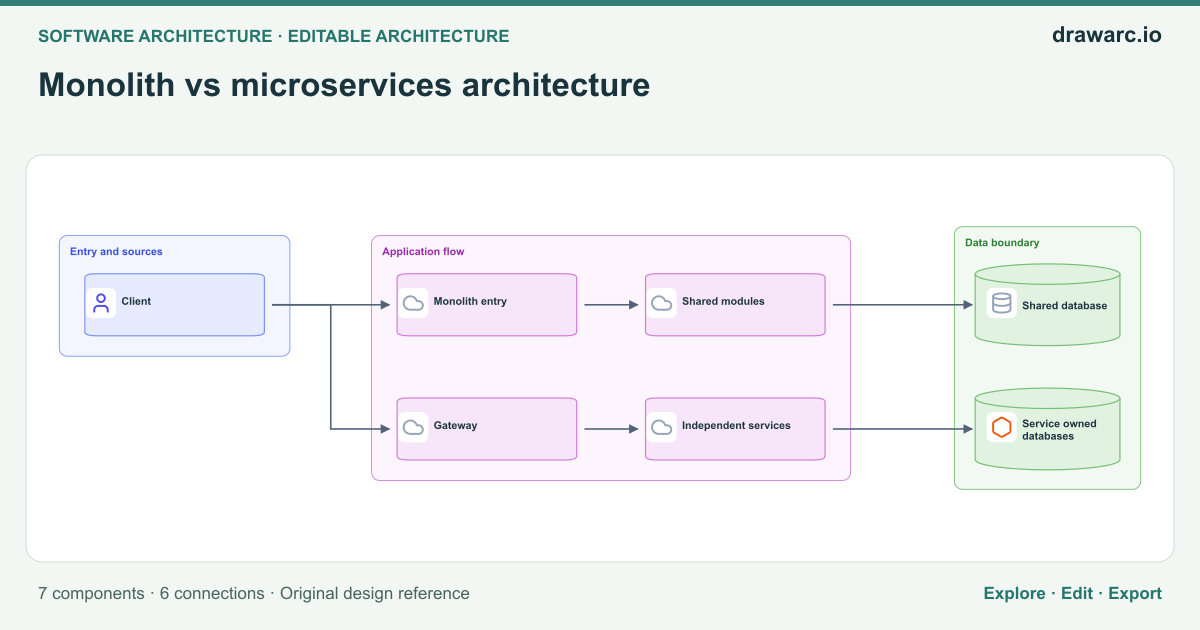
Monolith vs microservices architecture
Compare deployment independence against distributed-system overhead.
7 components · 6 connections
Explore monolith vs microservices architecture →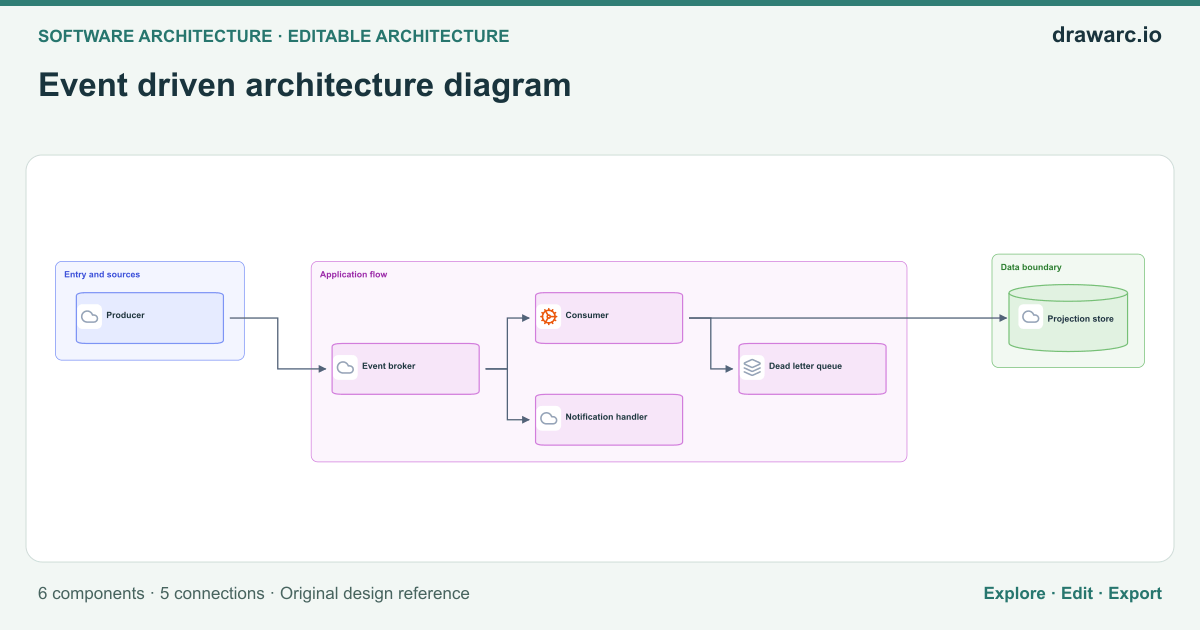
Event driven architecture diagram
Model delivery, replay and duplicate handling explicitly.
6 components · 5 connections
Explore event driven architecture diagram →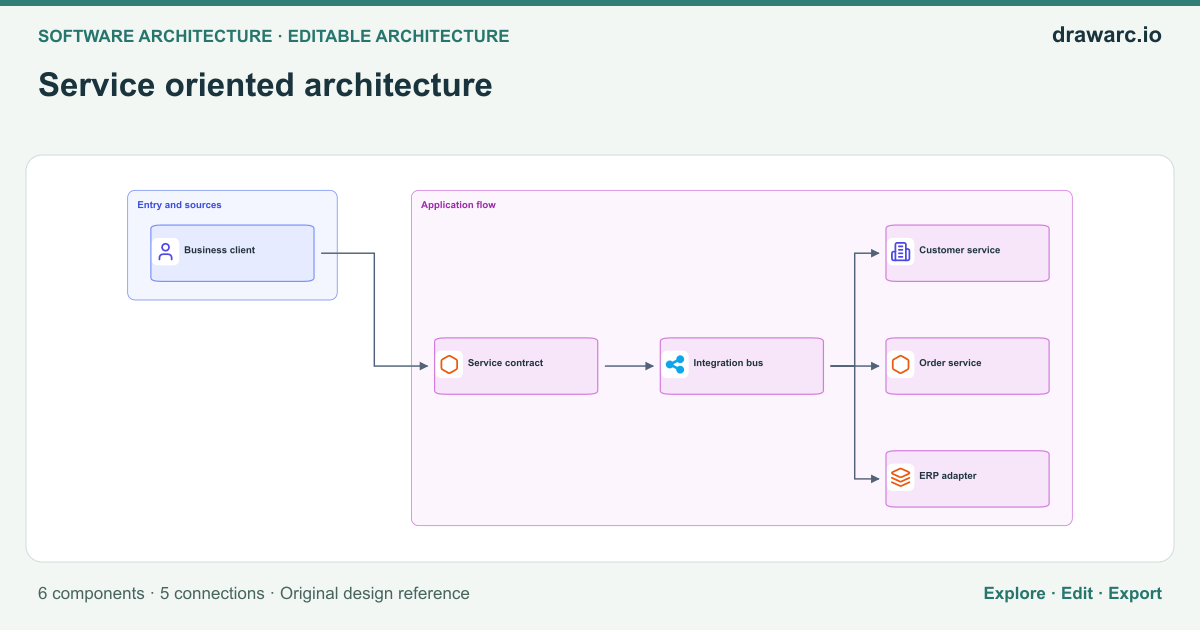
Service oriented architecture
Shared integration must not hide service ownership.
6 components · 5 connections
Explore service oriented architecture →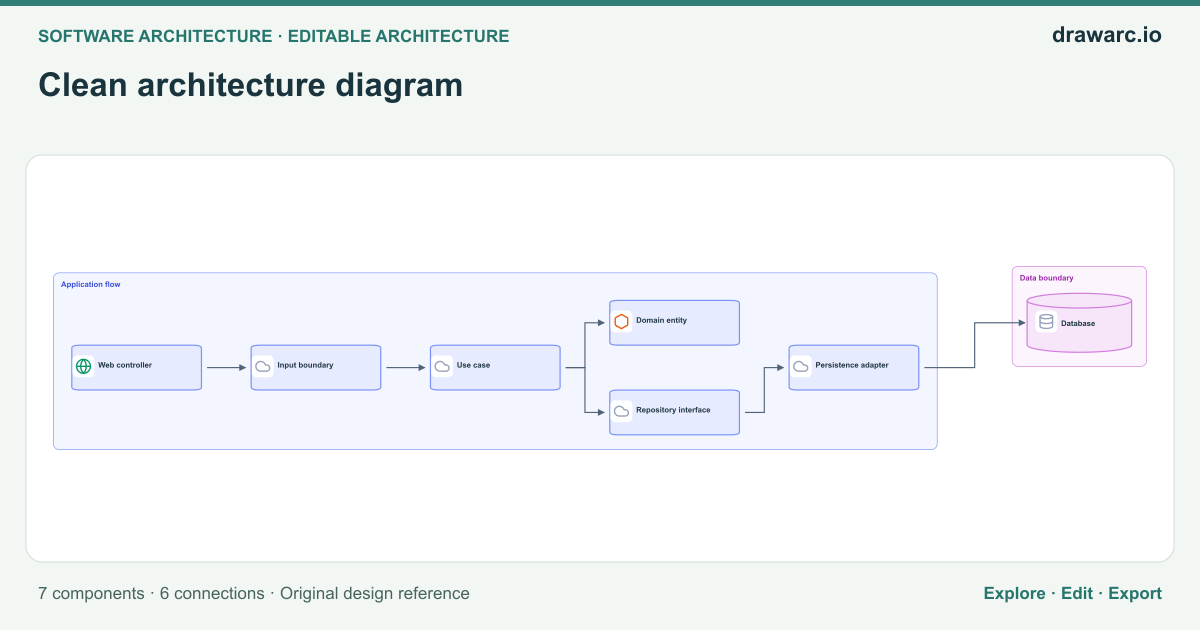
Clean architecture diagram
Dependencies point toward policy rather than infrastructure.
7 components · 6 connections
Explore clean architecture diagram →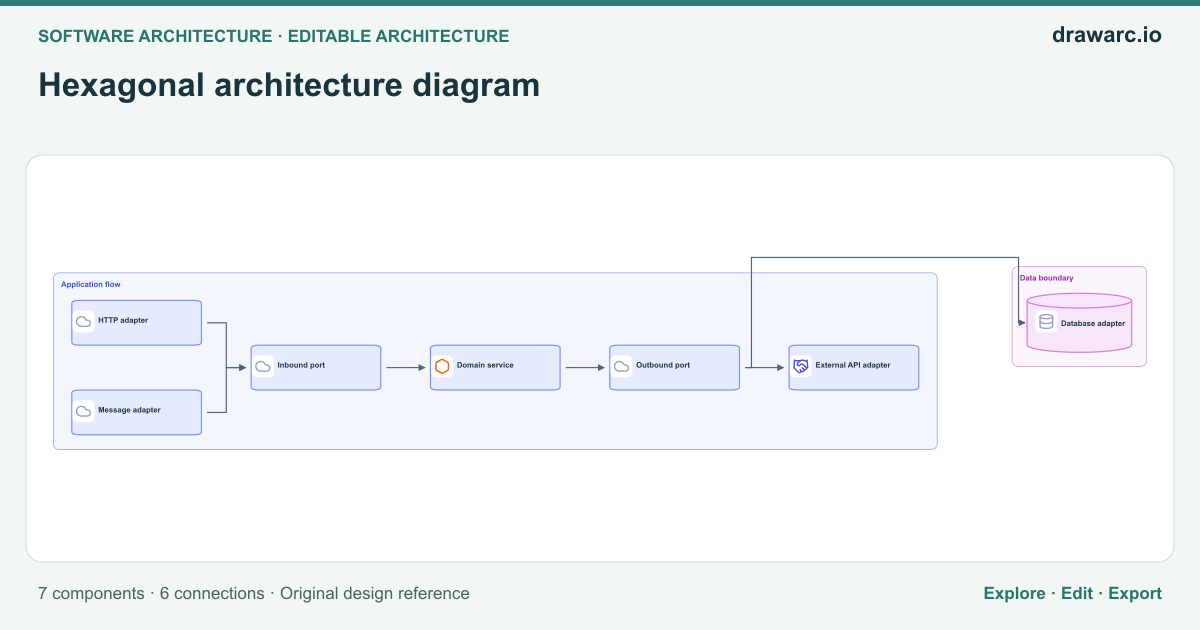
Hexagonal architecture diagram
Ports expose domain needs without choosing transport.
7 components · 6 connections
Explore hexagonal architecture diagram →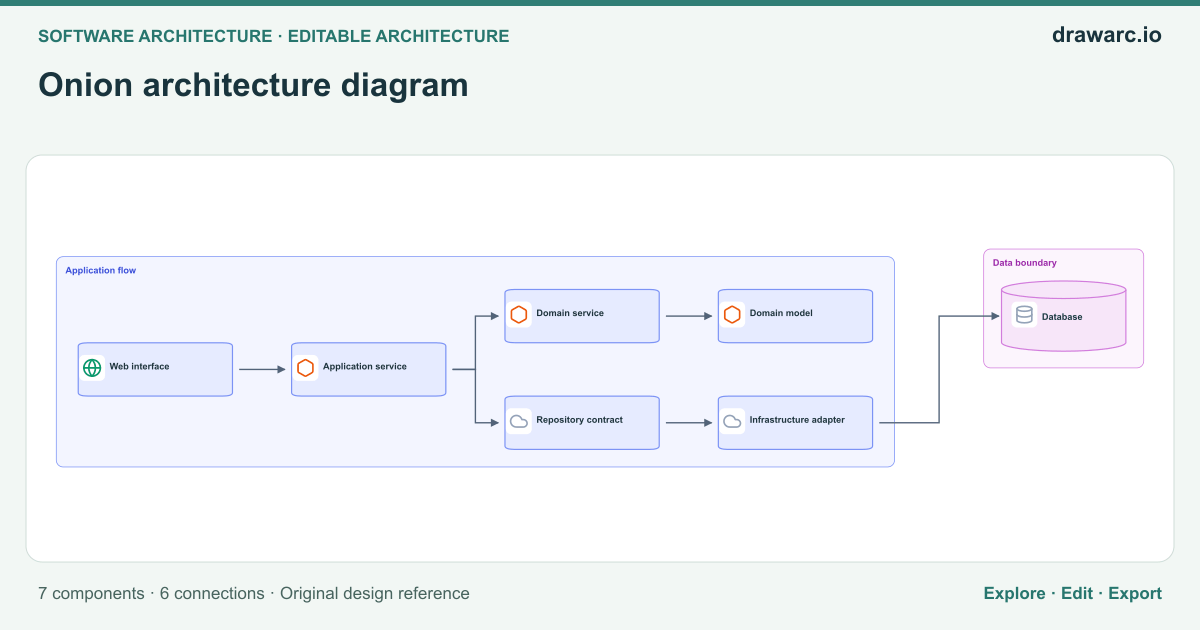
Onion architecture diagram
Infrastructure implements contracts owned by inner layers.
7 components · 6 connections
Explore onion architecture diagram →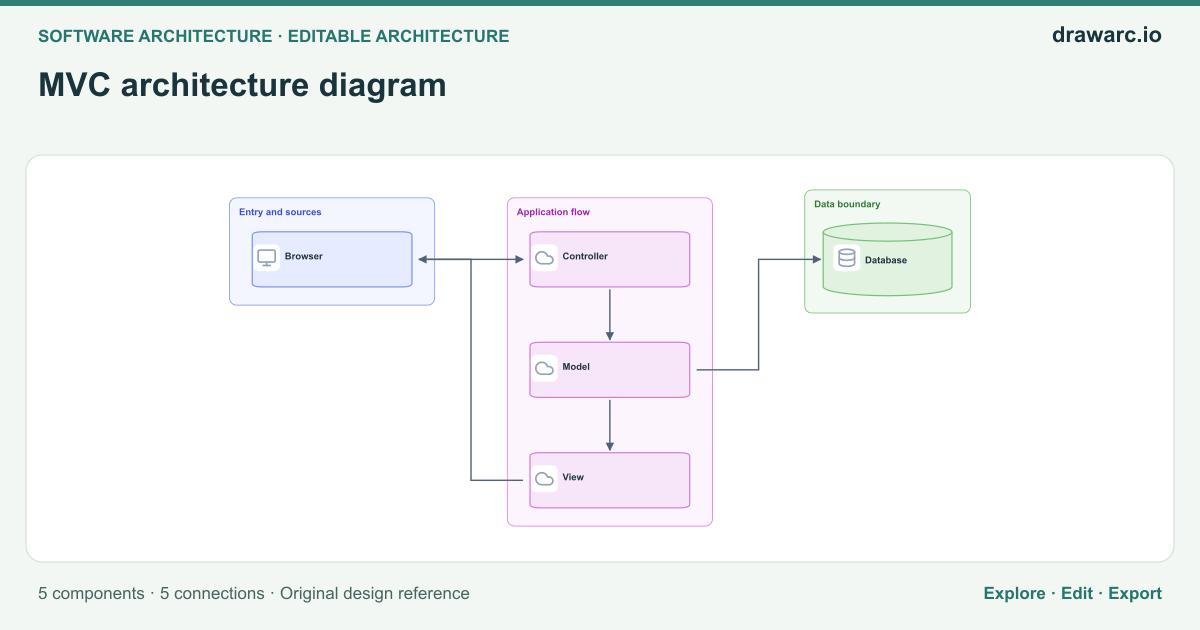
MVC architecture diagram
Separate request handling from state and rendering.
5 components · 5 connections
Explore mvc architecture diagram →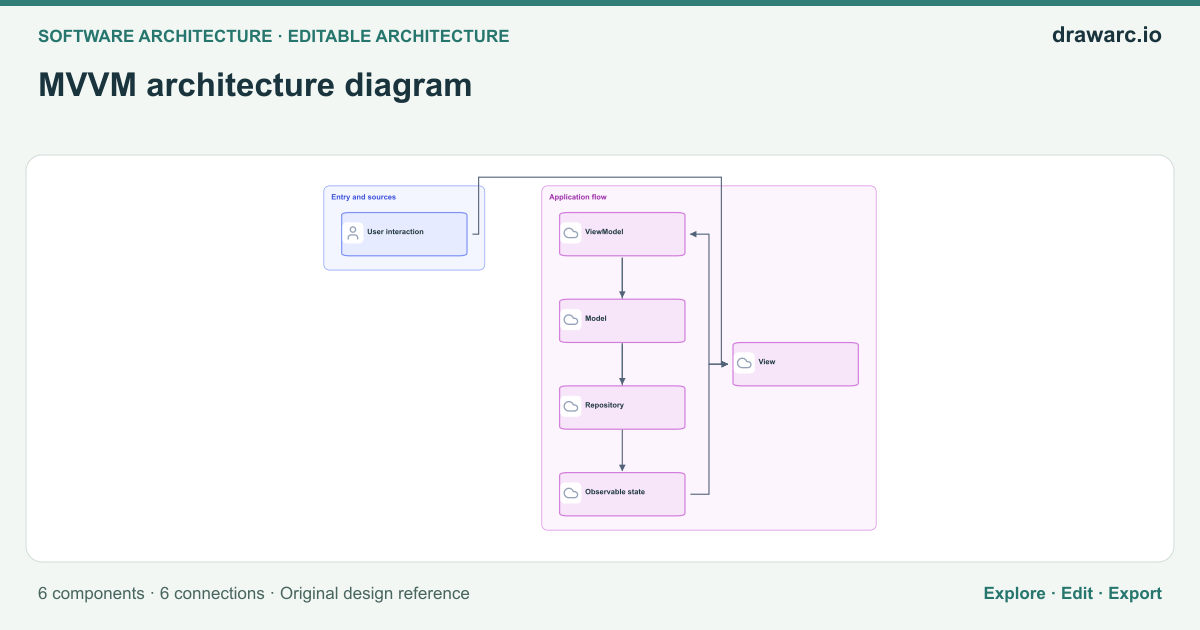
MVVM architecture diagram
Keep view state separate from domain persistence.
6 components · 6 connections
Explore mvvm architecture diagram →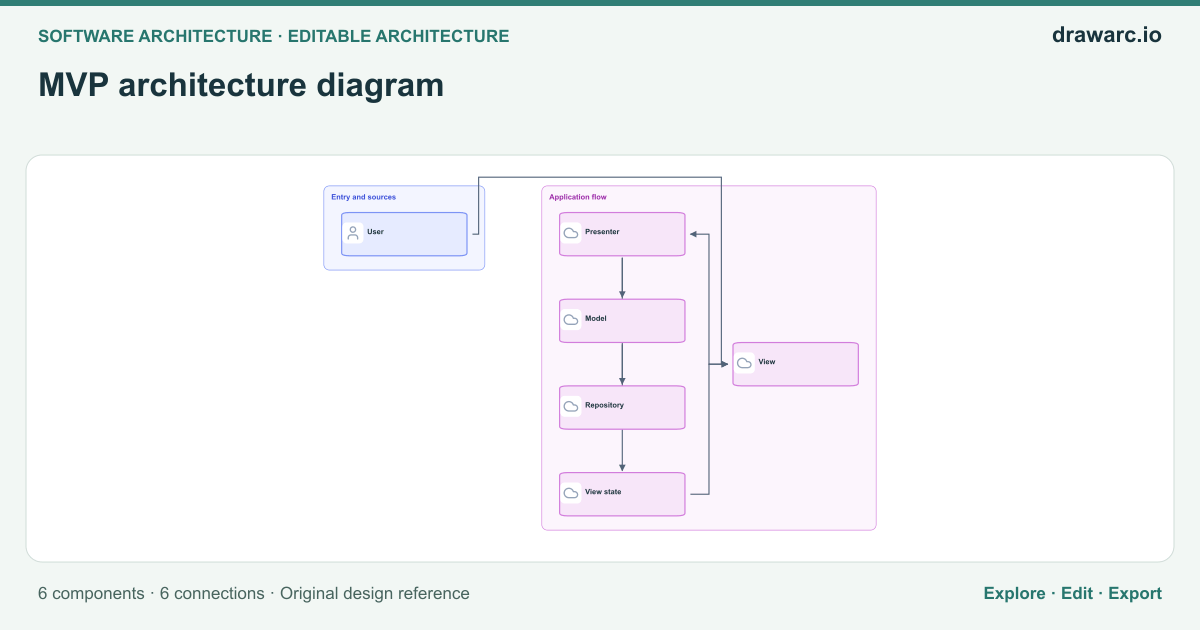
MVP architecture diagram
Presenter coordinates behavior through a view interface.
6 components · 6 connections
Explore mvp architecture diagram →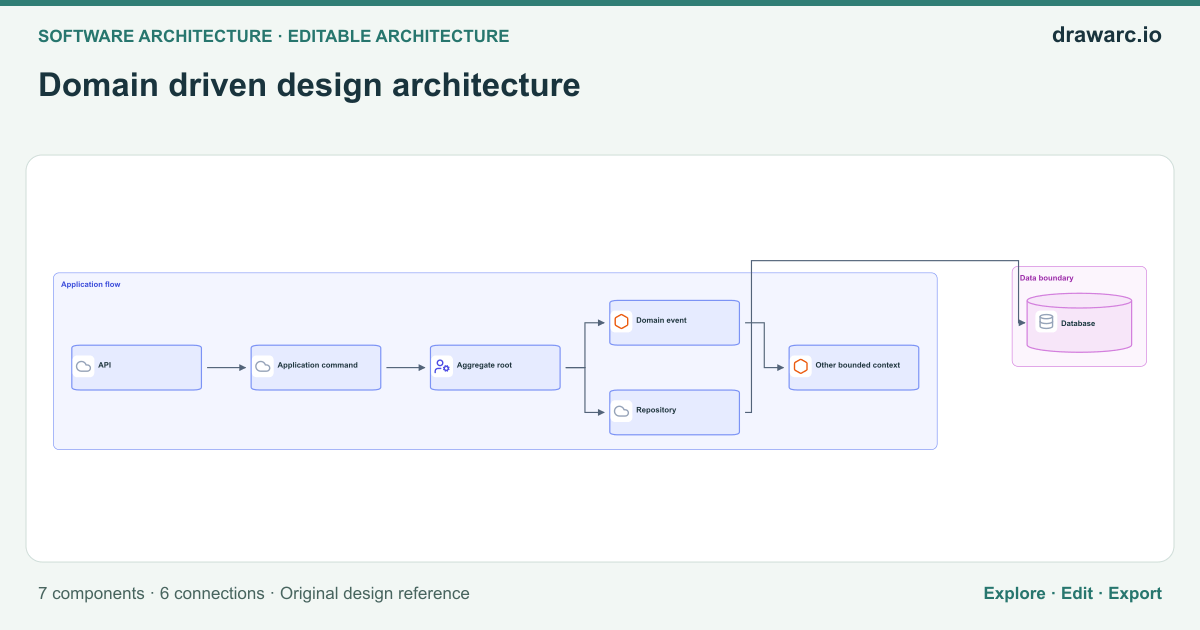
Domain driven design architecture
Align aggregates and contracts with business boundaries.
7 components · 6 connections
Explore domain driven design architecture →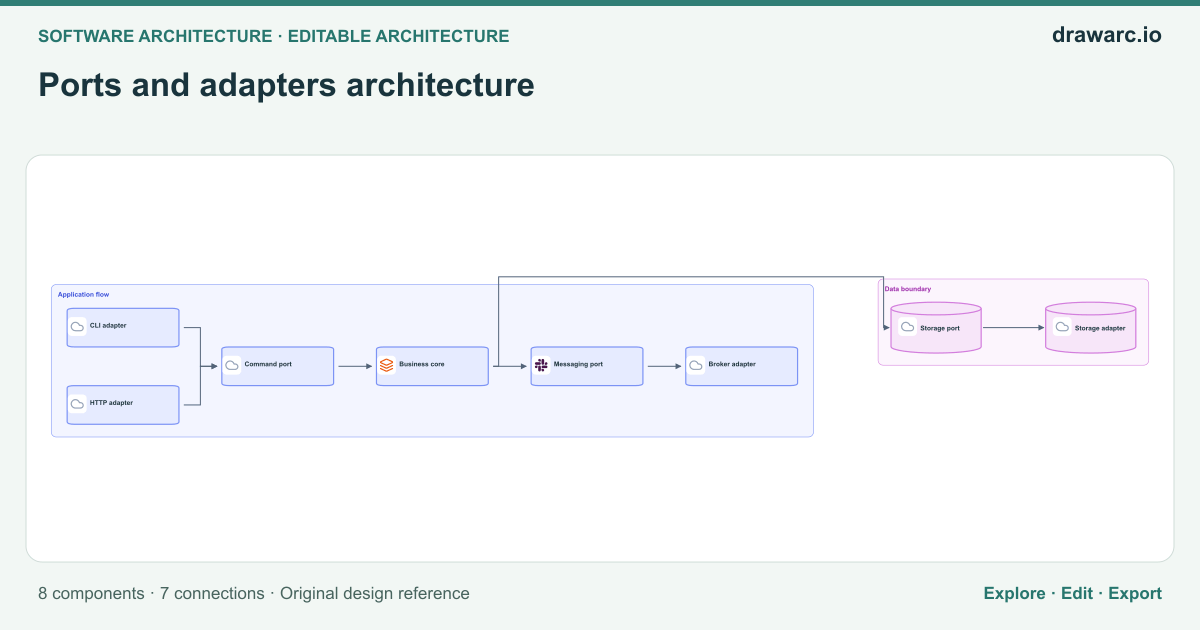
Ports and adapters architecture
Adapters can change without rewriting core behavior.
8 components · 7 connections
Explore ports and adapters architecture →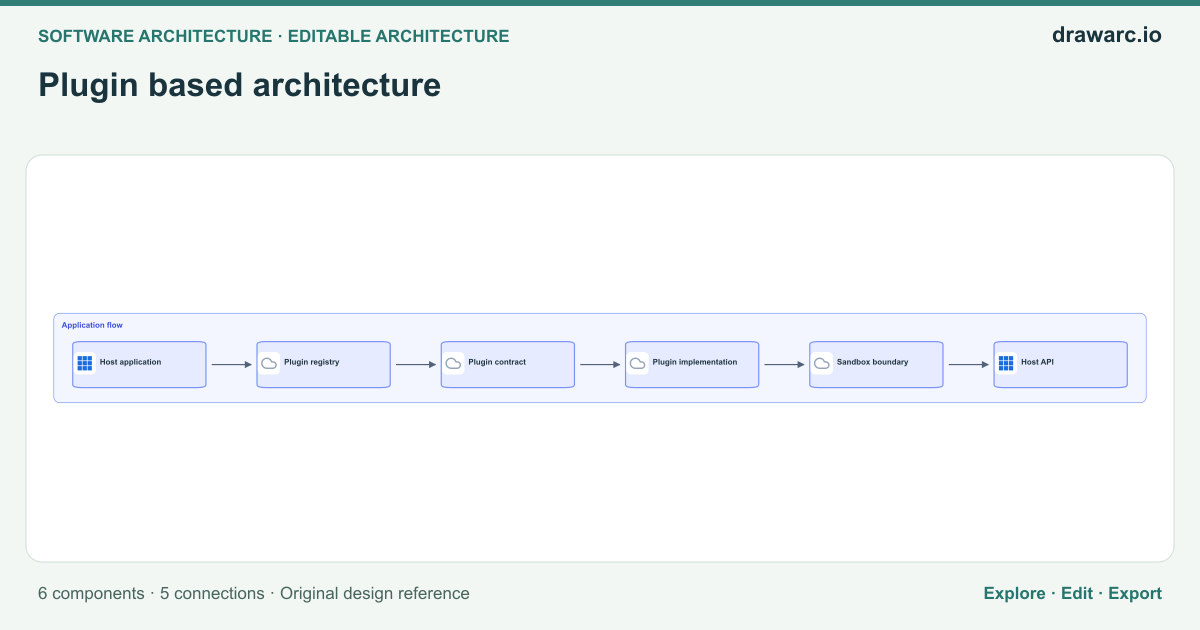
Plugin based architecture
Version plugin contracts and restrict host capabilities.
6 components · 5 connections
Explore plugin based architecture →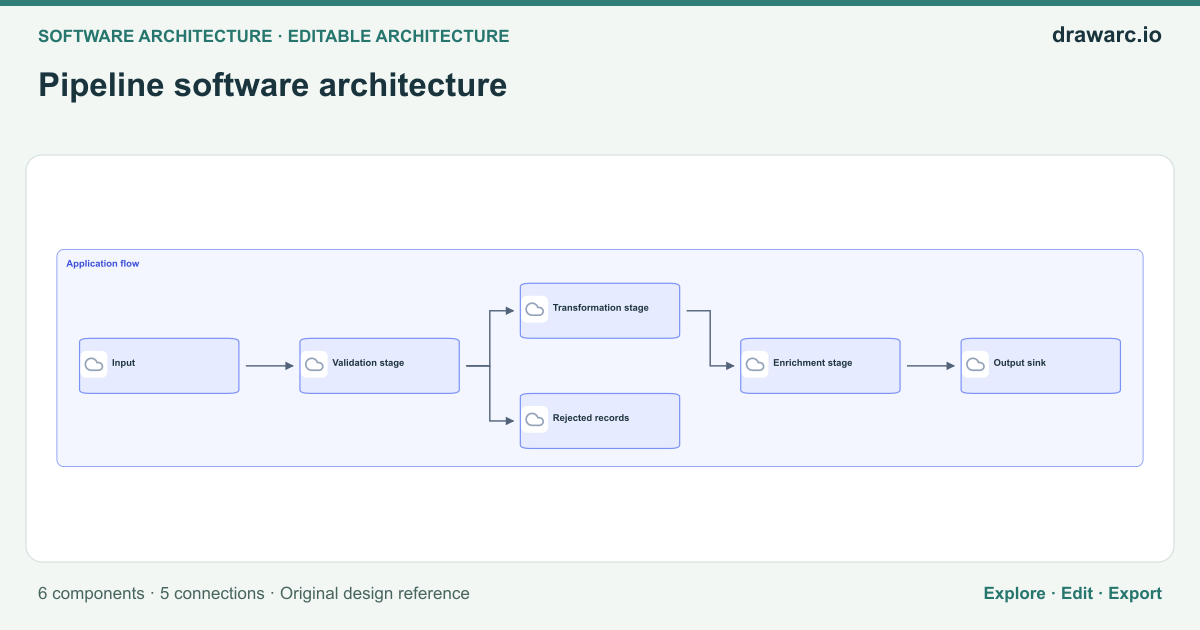
Pipeline software architecture
Define intermediate contracts and failure ownership per stage.
6 components · 5 connections
Explore pipeline software architecture →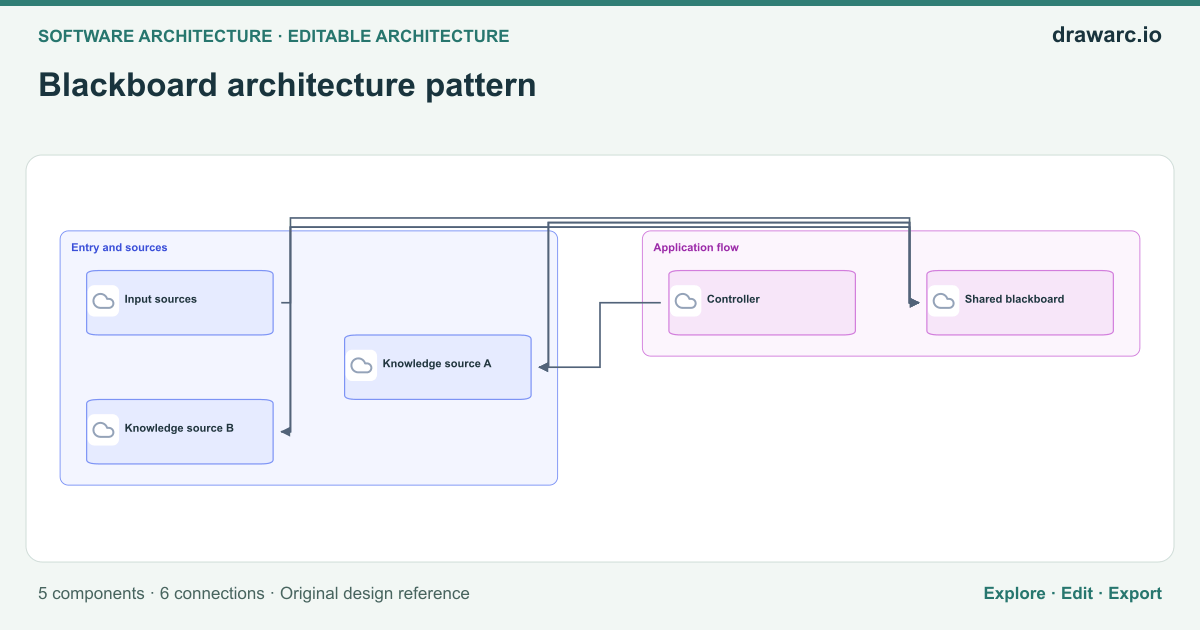
Blackboard architecture pattern
Coordinate shared state without uncontrolled contributor writes.
5 components · 6 connections
Explore blackboard architecture pattern →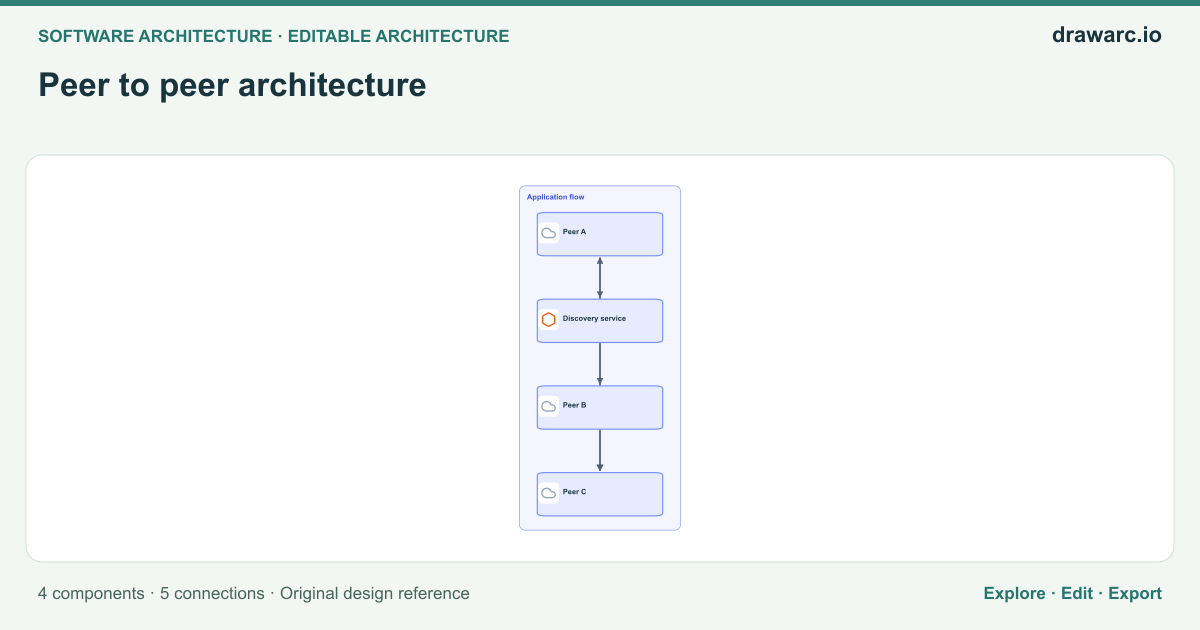
Peer to peer architecture
Separate peer discovery from authenticated data exchange.
4 components · 5 connections
Explore peer to peer architecture →